The G♯ dim Chord Explained
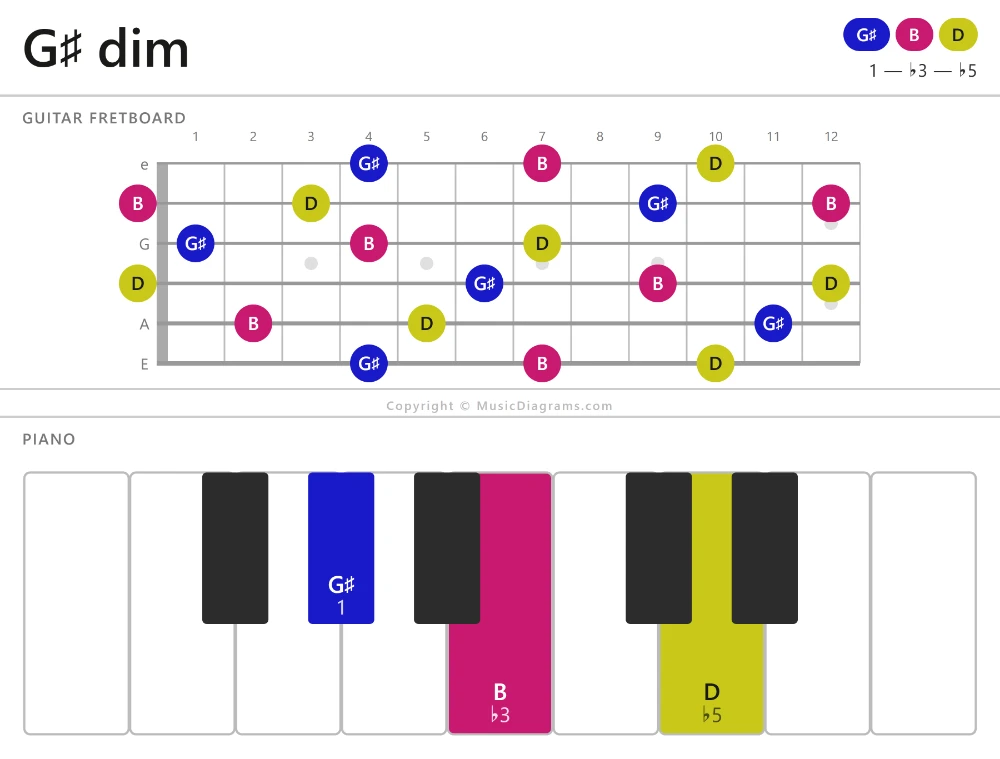
G-sharp diminished is a Diminished chord made from the notes G♯, B, and D. Its root is G♯, and its interval number formula is 1–♭3–♭5, which gives you the interval names root, minor third, and diminished fifth. This small, tense chord is built by lowering both the third and the fifth from a major triad, and you can use the chord widget above to see and hear these notes clearly. If you are new to chord building, learning about chord intervals can make this structure much easier to understand. Common names for this chord include G♯ diminished, G♯ dim, and G♯°.
G♯ dim Alternate Names
- G♯ diminished
- G♯ dim
- G♯°
G♯ dim Chord Notes
G♯ dim Chord Formula
G♯ dim Chord Notation
How To Use G♯ dim In Music
Because of its narrowed shape, this chord sounds tense, unstable, and suspenseful, so it often creates a strong pull toward a more settled chord. Beginners often hear diminished chords as dramatic or mysterious, and that feeling can become softer or stronger depending on the chords around them. For example, in A minor, vii° can be G♯ dim moving to i, making a progression like vii°–i feel very directed. You might also hear it in longer progressions such as III–vii°–i or iv–vii°–i, where G♯ dim adds tension just before the resolution. Its dark color is related to the sound explained in a diminished chord guide, but the exact mood always depends on tempo, rhythm, and what harmony comes next.
G♯ dim Chord Inversions
Another useful idea is inversion, which means the same chord tones are rearranged so a note other than the root is the lowest pitch. For G♯ diminished in root position, G♯ is the lowest note; in first inversion, B is the lowest; and in second inversion, D is the lowest. These inversions still contain G♯, B, and D, but they can feel different in motion and balance. A root-position shape often sounds strongest and most direct, while inversions can sound smoother and help connect nearby chords with less jumping in the bass. Writers use inversions to create better voice leading, gentler transitions, or a more flowing bass line, even though the basic diminished quality of the chord stays the same. You may also come across close-voiced or more widely spaced versions of the chord, which change the texture without changing its identity.