The B♭ aug7 Chord Explained
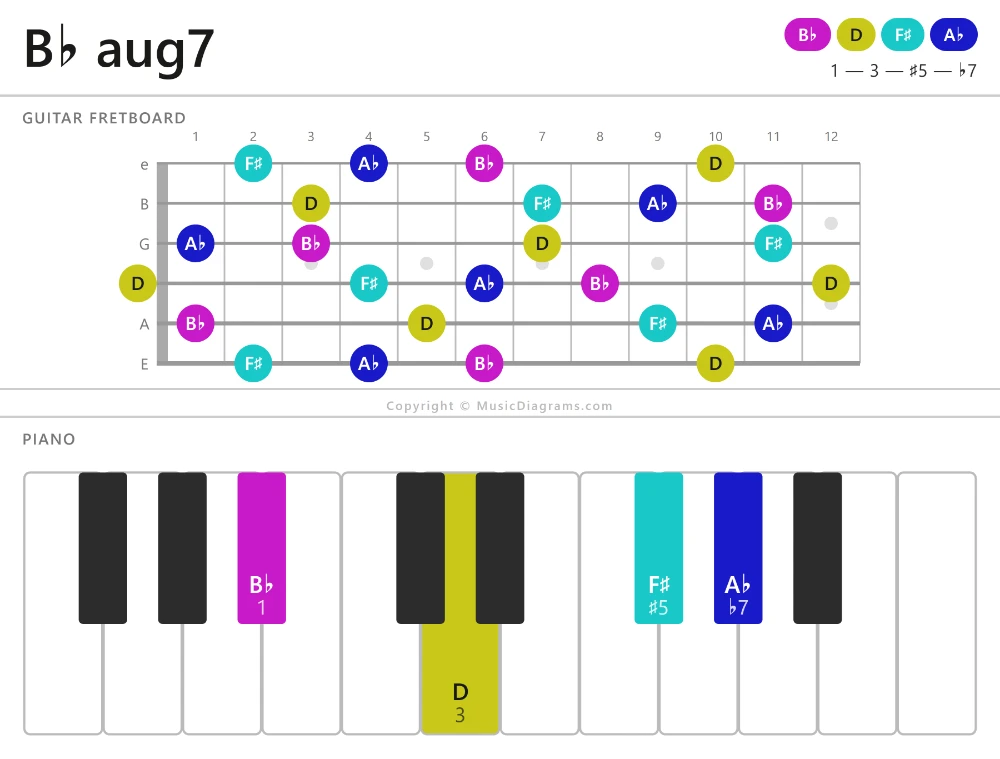
B-flat augmented seventh is an Augmented chord built from the notes B♭, D, F♯, and A♭. Its root is B♭, so the chord is named from that starting note, and you can learn more about that idea here: chord root. The interval number formula is 1–3–♯5–♭7, which gives you the interval names root, major third, augmented fifth, and minor seventh. In plain-text spelling, this chord may also be called B-flat augmented seventh, and common symbols include B♭+7, B♭aug7, and B♭7♯5.
B♭ aug7 Alternate Names
- B♭+7
- B♭aug7
- B♭7♯5
B♭ aug7 Chord Notes
B♭ aug7 Chord Formula
B♭ aug7 Chord Notation
How To Use B♭ aug7 In Music
Because it contains both a bright major third and a tense raised fifth, this chord sounds bold, unstable, and full of forward motion. The added minor seventh gives it a pull that often wants to resolve, so it can create excitement, drama, or a bluesy edge depending on the chords around it. For example, in a progression like I–V+–I in B♭ major, B♭ aug7 can act as a colorful altered sound before moving onward, and in jazz or turnaround-style writing you might hear something like ii–V–I with an altered dominant flavor. If you want to better understand why this chord feels so tense, this guide to chord intervals can help. Use the widget above to see and hear B♭, D, F♯, and A♭ together as one vivid chord color.
B♭ aug7 Chord Inversions
Inversions happen when a note other than the root is placed at the bottom of the chord. For B♭ augmented seventh, root position is B♭–D–F♯–A♭, while possible inversions include D–F♯–A♭–B♭, F♯–A♭–B♭–D, and A♭–B♭–D–F♯. Each inversion keeps the same notes but changes the bass note, which can make the chord feel smoother, more dramatic, or more connected to the next chord in a progression. Players and arrangers use inversions to create better voice leading, reduce big jumps between chords, and shape the mood without changing the basic harmonic identity of the chord. Variations in spelling, such as B♭7♯5, usually point to the same core sound.