The A 6/9 Chord Explained
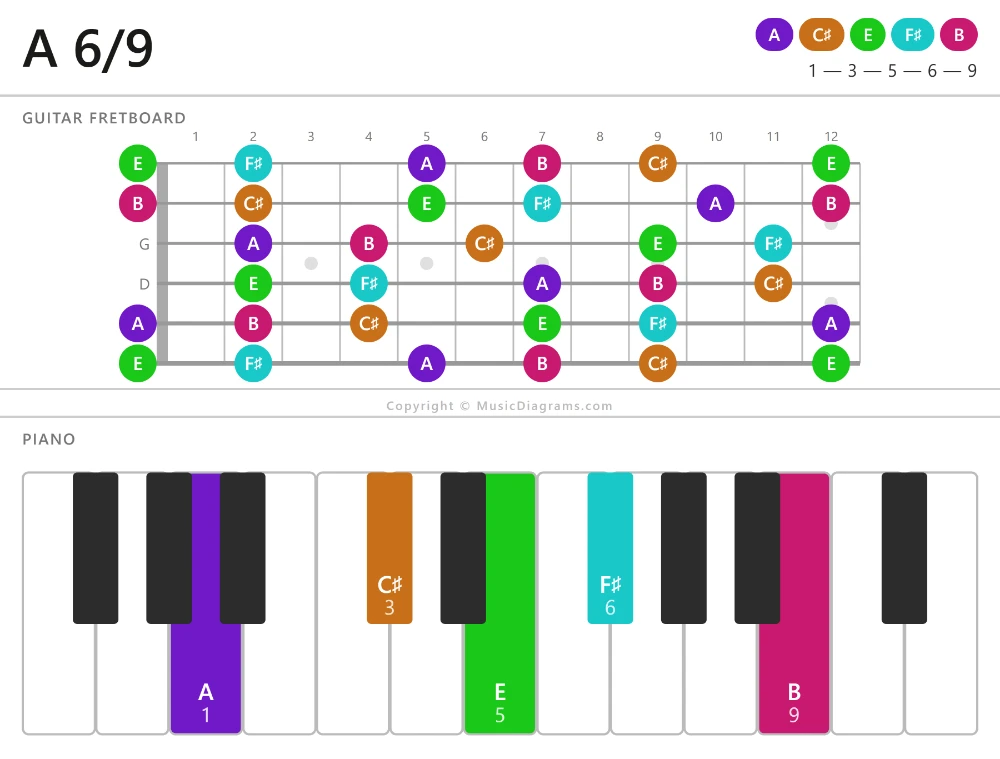
A six-nine chord is a colorful chord built from the notes A, C♯, E, F♯, and B. Its root is A, and its interval number formula is 1–3–5–6–9, which gives you the interval names root, major third, perfect fifth, major sixth, and major ninth. Even though it contains extra color tones, it fits best in the Major chord family because its basic foundation is a major triad. You may also see it written as A6/9, A 6/9, or A add6 add9. If you look at the widget above, you can see and hear how these notes stack together, and learning about chord intervals can make the structure even easier to understand.
A 6/9 Alternate Names
- A6/9
- A 6/9
- A add6 add9
A 6/9 Chord Notes
A 6/9 Chord Formula
A 6/9 Chord Notation
How To Use A 6/9 In Music
Often, this chord sounds warm, open, bright, and slightly jazzy without feeling tense. Because the 6th and 9th add gentle color, A6/9 can make music feel relaxed, hopeful, dreamy, or polished. It works especially well as a tonic-style chord in major keys, so in the key of A major it can appear as I, or after movement such as vi–ii–V–I, where the final I is A6/9 instead of a plain A major chord. You might also hear the note A used this way at the end of pop, jazz, soul, or acoustic progressions to create a richer landing point. The chords around it matter too: next to simple major chords it can sound smooth and sweet, while after stronger tension chords it can feel especially satisfying and elegant. If you want a clearer sense of how its major foundation shapes that sound, compare it with a basic major chord.
A 6/9 Chord Inversions
Inversions happen when a note other than A is the lowest note, which changes the weight and flow of the chord without changing its basic identity. In root position, A is in the bass, but you can also hear versions such as A6/9/C♯, A6/9/E, A6/9/F♯, or A6/9/B. These inversions can make the chord sound lighter, smoother, or less final, depending on which note is underneath. For example, C♯ in the bass often sounds more connected and flowing, while B in the bass can sound more suspended and airy. Players use inversions to create smoother bass lines, connect chords with less jumping, and shape the mood of a progression in a more musical way. Variations may also leave out certain notes in real playing, especially on guitar, but the major sound with added 6th and 9th is what gives the chord its character.