The A♭ 6/9 Chord Explained
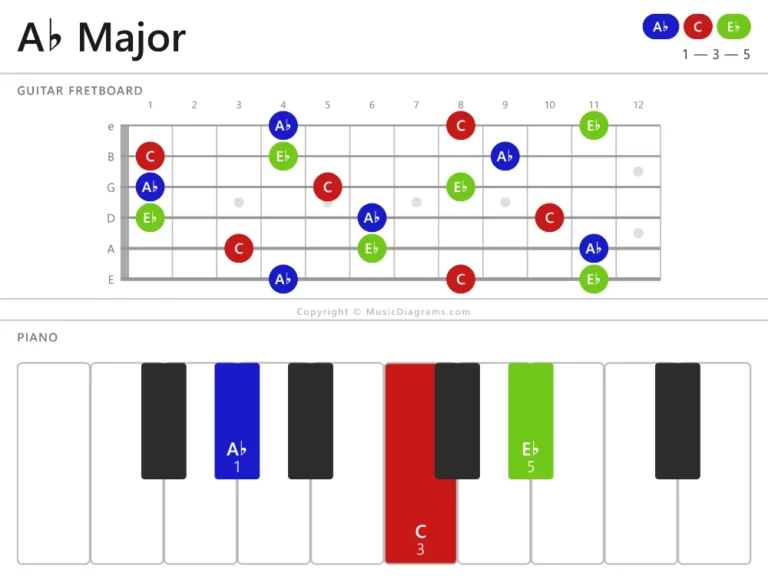
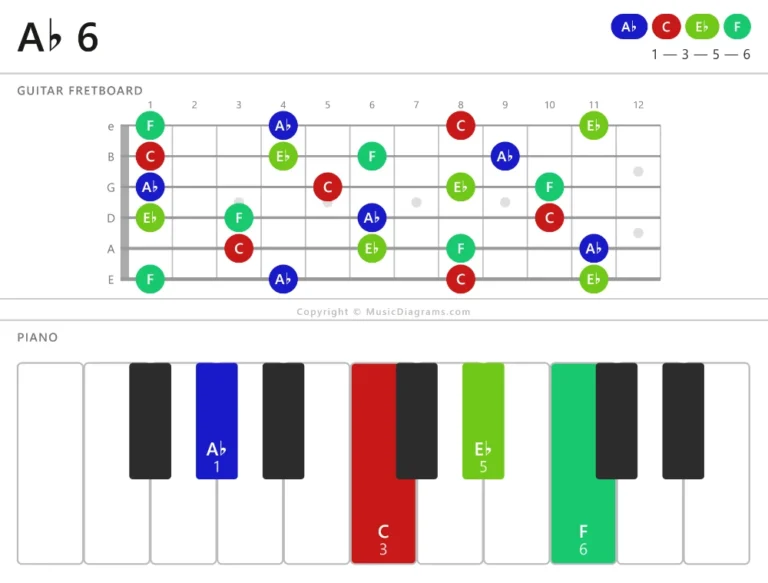
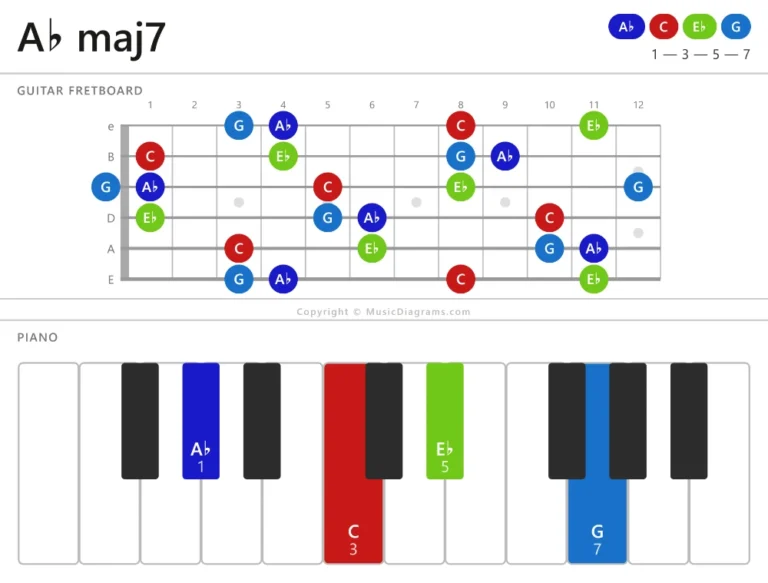
A-flat six add nine is a Major chord family sound built from the notes A♭, C, E♭, F, and B♭. Its root is A♭, and its interval number formula is 1-3-5-6-9, which gives you the interval names root, major third, perfect fifth, major sixth, and major ninth. You may also see this chord written as A♭6/9, A-flat 6/9, or A-flat major 6/9. Because the basic major triad is expanded with two warm color tones, it sounds richer than a plain major chord while still feeling stable. If you look at the widget above, you can use it to see and hear how these notes combine, and you can learn more about chord intervals as you explore the shape.
A♭ 6/9 Alternate Names
- A♭6/9
- A-flat 6/9
- A-flat major 6/9
A♭ 6/9 Chord Notes
A♭ 6/9 Chord Formula
A♭ 6/9 Chord Notation
How To Use A♭ 6/9 In Music
Often, A♭6/9 sounds smooth, open, warm, and gently jazzy rather than tense or dramatic. It can create a relaxed, polished mood in jazz, soul, pop ballads, and film music, and it is commonly used as a colorful resting chord in place of a plain I chord. For example, in the key of A♭ major, this chord can appear as I at the end of a progression like vi–ii–V–I, or as the opening color in I–IV–V–I. In actual chord names, that might look like Fm7–B♭m7–E♭7–A♭6/9. The chords around it matter: after stronger chords such as E♭7, it feels especially resolved and lush, while next to softer major or minor chords it can sound dreamy and floating. If you are new to harmony, it also helps to understand how this major-based color relates to major chords.
A♭ 6/9 Chord Inversions
Another useful idea is inversion, which means playing the same chord with a note other than A♭ in the bass. For A♭6/9, you might hear C in the bass, E♭ in the bass, F in the bass, or B♭ in the bass, while the chord still keeps the same overall note collection: A♭, C, E♭, F, and B♭. These inversions do not change the chord’s identity, but they do change its weight and color. A bass note of C can sound smoother and more connected, E♭ can feel grounded but less final than the root, F can add a softer floating quality, and B♭ can make the chord feel especially airy. Players use inversions to create stepwise bass movement, connect chords more smoothly, and shape the emotional flow of a progression without changing the harmony too much. Related variations may include simpler forms that leave out one color tone for easier playing, but the full 6/9 version is prized for its rich, elegant sound.