The A♭ m6/9 Chord Explained
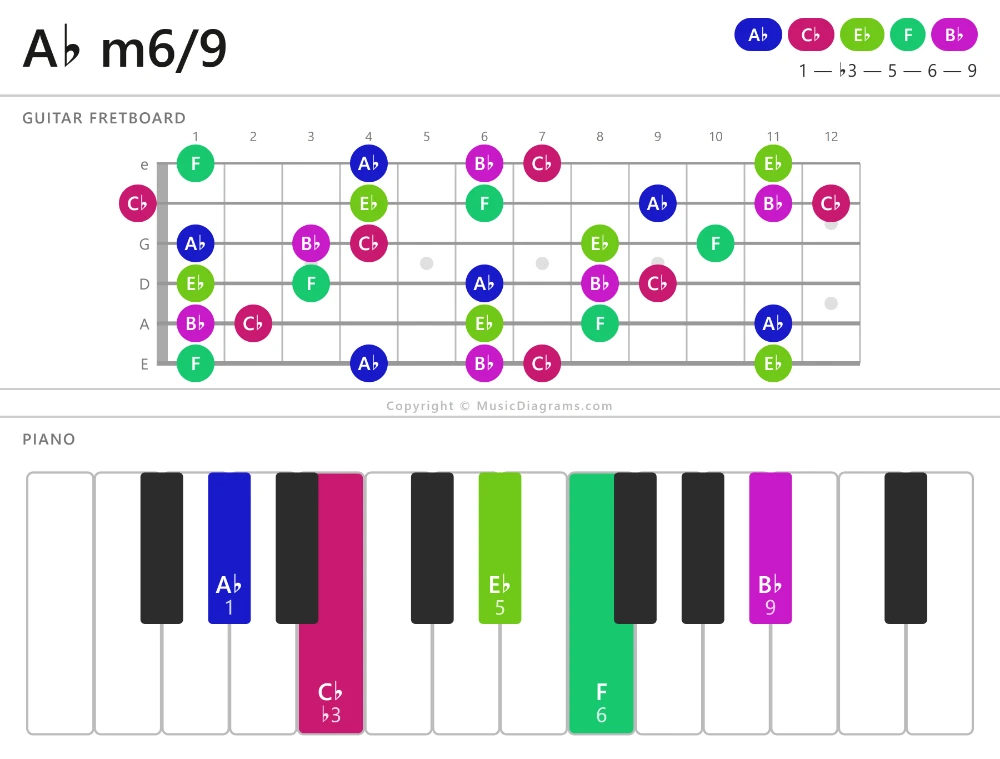
A-flat minor six add nine is a Minor chord built from the notes A♭, C♭, E♭, F, and B♭. Its root is A♭, and its interval number formula is 1-♭3-5-6-9, which gives you the interval names root, minor third, perfect fifth, major sixth, and major ninth. This color-rich minor chord keeps the basic minor sound while adding warmth and space through the 6th and 9th. If you look at the widget above, you can see and hear how these notes combine, and if you want to learn more about how these distances work, see chord intervals. Alternate names and symbols include A♭m6/9, A-flat minor 6 add 9, and A-flat minor six add nine.
A♭ m6/9 Alternate Names
- A♭m6/9
- A-flat minor 6 add 9
- A-flat minor six add nine
A♭ m6/9 Chord Notes
A♭ m6/9 Chord Formula
A♭ m6/9 Chord Notation
How To Use A♭ m6/9 In Music
Because A♭m6/9 includes both the soft sadness of a minor chord and the airy color of added tones, it often sounds smooth, reflective, jazzy, or cinematic rather than dark and heavy. It works well as a tonic-style color chord, a passing chord, or a richer substitute for a plain minor chord in styles like jazz, soul, R&B, pop, and film music. For example, in A♭ minor you might hear i–VI–III–VII with A♭m6/9 as the i, or in a more flowing progression such as i–iv–VII–III. The chords around it greatly affect its mood: next to brighter major chords it can feel tender and lush, while next to tenser harmonies it can feel more introspective. To compare its core sound with a simpler version, you can also read about what is a minor chord.
A♭ m6/9 Chord Inversions
Another useful idea for beginners is inversion, which means changing which note of the chord is the lowest. In root position, A♭m6/9 has A♭ as the lowest note. If C♭ is the bass, that is the first inversion; if E♭ is the bass, that is the second inversion; if F is the bass, that places the 6th in the bass; and if B♭ is the bass, that places the 9th in the bass. These inversions do not change the chord’s name family, but they do change the feel: lower chord tones in the bass often sound more stable, while F or B♭ in the bass can sound lighter, more open, or more suspended. Musicians use inversions to make chord changes smoother, create stepwise bass lines, and shape the mood without changing the basic harmony.