The B♭ m9 Chord Explained
B-flat minor ninth is a Minor chord family sonority built from the notes B♭, D♭, F, A♭, and C. Its root is B♭, and its interval number formula is 1-♭3-5-♭7-9, which gives you the interval names root, minor third, perfect fifth, minor seventh, and major ninth. You may also see it written as B♭m9, B-flat minor 9, or B-flat minor ninth. If you look at the widget above, you can match these notes on piano and guitar and hear how the added 9th gives the basic minor sound a more spacious color. To better understand how this chord is built, see chord intervals.
B♭ m9 Alternate Names
- B♭m9
- B-flat minor 9
- B-flat minor ninth
B♭ m9 Chord Notes
B♭ m9 Chord Formula
B♭ m9 Chord Notation
How To Use B♭ m9 In Music
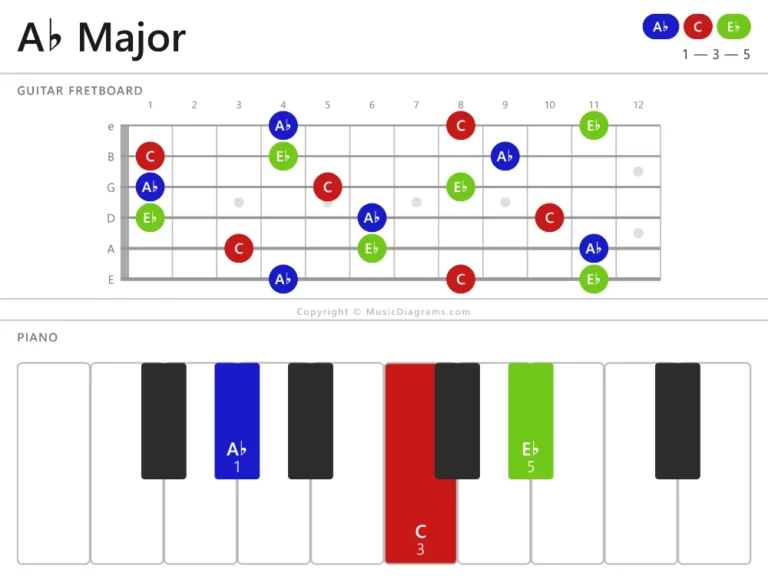
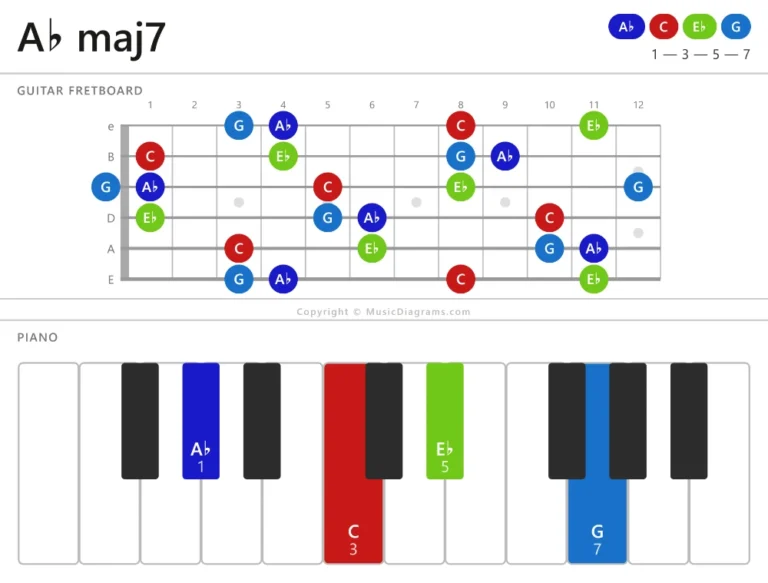
Because B♭m9 combines a dark minor quality with a smooth, airy 9th, it often sounds soulful, reflective, jazzy, or cinematic rather than harsh. On its own, B♭m9 can feel gentle and emotional, but the surrounding chords can make it seem warmer, sadder, or more mysterious. For example, it might appear as the ii chord in A♭ major in a ii–V–I progression: B♭m9–E♭7–A♭maj7. It can also work in a moody minor sequence such as i–VI–ii–V when borrowed colors are used: Gm7–E♭maj7–B♭m9–F7. In styles like neo-soul, jazz, R&B, and film music, this chord is often chosen for its richer color compared with a plain minor triad; if you want a simpler comparison point, you can also read about what is a minor chord.
B♭ m9 Chord Inversions
Another useful idea is inversion, which means the chord keeps the same notes but a note other than B♭ is placed in the bass. For B♭m9, root position has B♭ in the bass, while inversions could place D♭, F, A♭, or even C as the lowest note. A version with D♭ in the bass can sound smoother and less final, while F or A♭ in the bass can create a softer transition between chords. Pianists, guitarists, and arrangers use inversions to make progressions easier to play, improve voice-leading, and shape the mood without changing the chord’s basic identity. You may also hear close voicings or more open versions of B♭m9, where the same chord tones are spread out to sound warmer, clearer, or more spacious.