The B♯ 6 Chord Explained
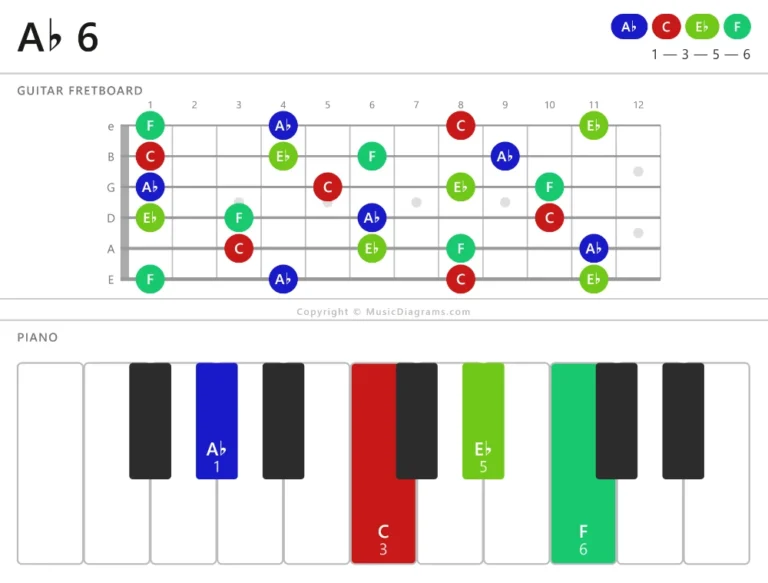
B-sharp sixth is a Major-family chord built from the notes B♯, D♯♯, F♯♯, and G♯♯. Its root is B♯, and its interval number formula is 1–3–5–6, which gives you the interval names root, major third, perfect fifth, and major sixth. If you look at the widget above, you can see these chord tones laid out on piano and guitar, which makes it easier to connect the sound to the note names. To understand how these distances work, see chord intervals. This chord may also be called B♯ major sixth or written with symbols such as B♯6.
B♯ 6 Alternate Names
- B♯6
- B-sharp 6
- B-sharp major sixth
B♯ 6 Chord Notes
B♯ 6 Chord Formula
B♯ 6 Chord Notation
How To Use B♯ 6 In Music
Often, B♯6 sounds bright, warm, and a little more colorful than a plain major chord because the added sixth softens the sound without making it feel tense. It can work well in pop, jazz, vintage ballads, and harmonically rich accompaniment. Its mood can feel stable on its own, but the chords around it change the effect: after a tense chord it can sound like relief, while before a stronger destination it can feel gently unfinished. For example, in a major-key progression it might appear as I–IV–B♯6–V, or in a smoother loop such as vi–ii–B♯6–I. Compared with a basic major chord, the sixth adds sweetness and motion.
B♯ 6 Chord Inversions
Another useful idea is inversion, which means the chord keeps the same notes but a different note is placed in the bass. For B♯6, root position has B♯ as the lowest note, while inversions could place D♯♯, F♯♯, or G♯♯ at the bottom. These changes do not create a brand-new chord quality, but they do change the weight and color of the sound. A first-inversion shape can feel smoother when connecting chords, a fifth in the bass can sound more open, and the sixth in the bass can give the chord a softer, more flowing character. Musicians use inversions to improve voice leading, create bass movement, and make a progression feel less jumpy. You may also hear close voicings and wider spacings of B♯6, both of which keep the same basic chord identity while changing the overall texture.