The B♯ dim Chord Explained
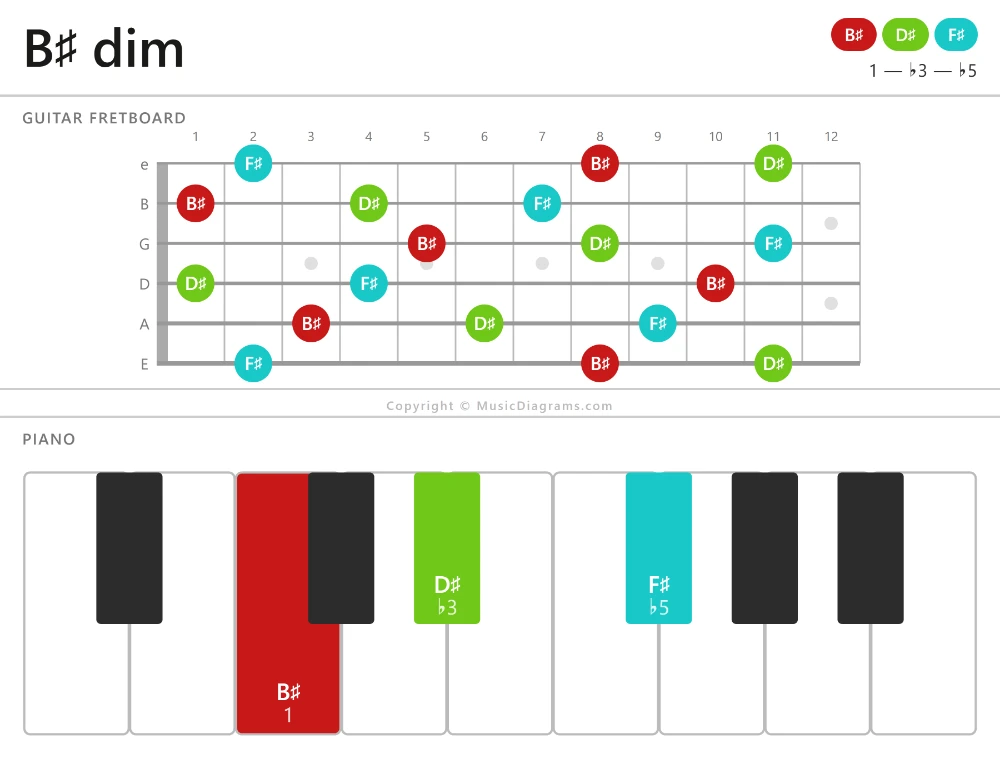
B-sharp diminished is a Diminished chord built from the notes B-sharp, D-sharp, and F-sharp. Its root is B-sharp, and its interval number formula is 1-♭3-♭5, which gives you the interval names root, minor third, and diminished fifth. You may also see it written as B♯dim or B♯o, and the plain-text spelling is B-sharp diminished. If you look at the widget above, you can see these three chord tones laid out clearly on piano and guitar, which is a great way to connect the sound with the shape. To understand why these notes create this tense color, it helps to learn more about chord intervals.
B♯ dim Alternate Names
- B♯dim
- B♯o
- B-sharp diminished
B♯ dim Chord Notes
B♯ dim Chord Formula
B♯ dim Chord Notation
How To Use B♯ dim In Music
Because of its diminished fifth, this chord has a tight, unstable sound that often feels tense, dramatic, or mysterious. B-sharp diminished is commonly used as a passing chord, a leading-tone chord, or a way to add suspense before a more stable harmony arrives. For example, in a key where this chord functions as a leading diminished sonority, it may move from vii° to I, or appear in longer progressions such as ii-vii°–I. Its mood can feel sharper or softer depending on the chords around it: placed between gentle chords it can sound surprising, but beside other tense harmonies it can sound natural and purposeful. If you want to compare its darker pull with a related chord type, see this guide to a diminished chord.
B♯ dim Chord Inversions
Inversions happen when a note other than the root is placed at the bottom of the chord. For B-sharp diminished, root position is B-sharp-D-sharp-F-sharp, first inversion is D-sharp-F-sharp-B-sharp, and second inversion is F-sharp-B-sharp-D-sharp. These inversions keep the same notes but change the balance and feel of the chord. A root-position shape often sounds most direct and tense, while inversions can sound smoother and make it easier to connect one chord to the next. Musicians use inversions to improve voice leading, create a gentler bass motion, or make a progression sound more flowing without changing the basic harmonic function. You might also hear close variations in different instrument voicings, where the same three notes are rearranged in different octaves.