The C♭ 6/9 Chord Explained
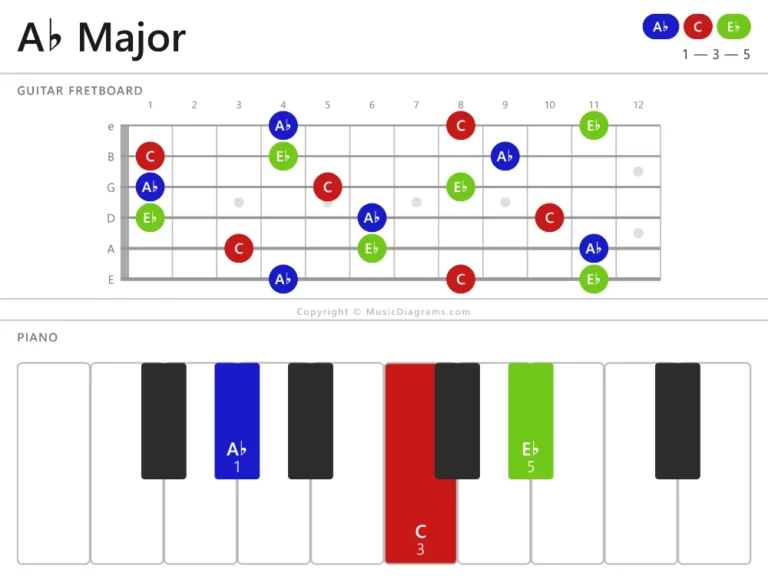
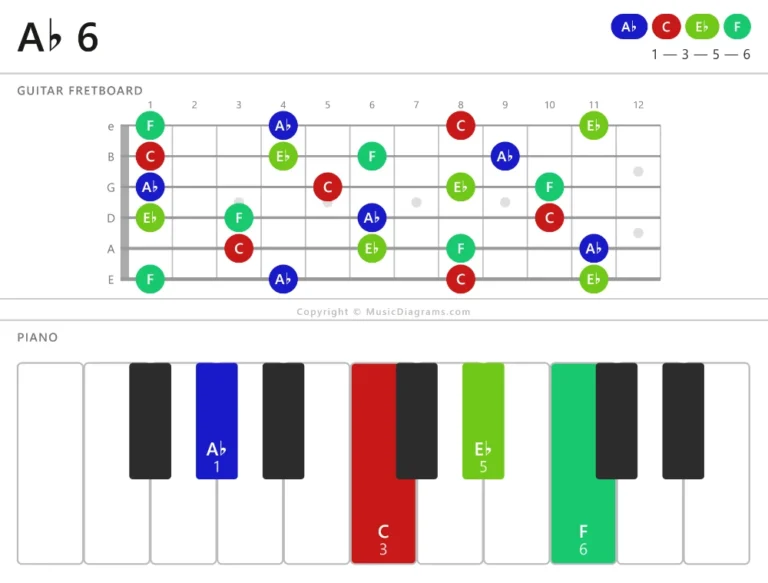
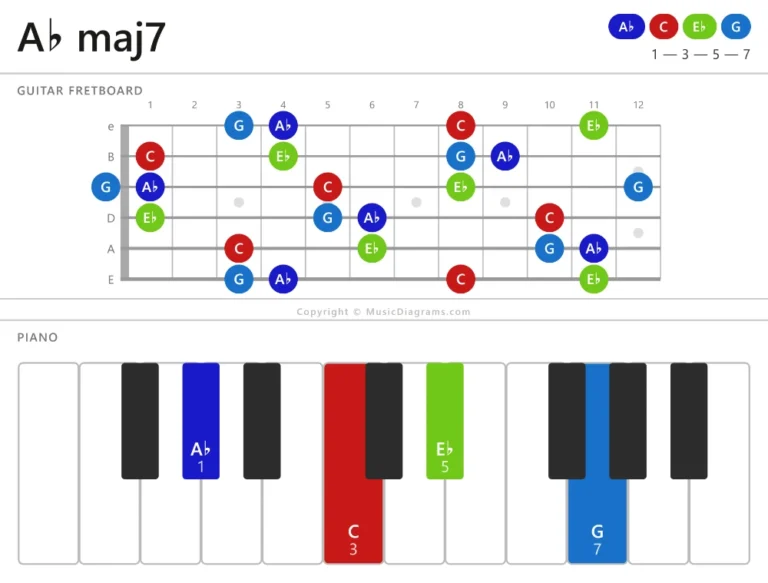
C-flat six-nine is a Major chord family sonority built from the notes C-flat, E-flat, G-flat, A-flat, and D-flat. Its root is C-flat, and its interval number formula is 1–3–5–6–9, which gives you the interval names root, major third, perfect fifth, major sixth, and major ninth. You may also see it written as C-flat 6/9, C-flat six add nine, or C-flat major 6/9. If you look at the widget above, you can use it to spot these chord tones on piano or guitar and hear how the notes blend together. To better understand why these note distances matter, see understanding chord intervals.
C♭ 6/9 Alternate Names
- C-flat 6/9
- C-flat six add nine
- C-flat major 6/9
C♭ 6/9 Chord Notes
C♭ 6/9 Chord Formula
C♭ 6/9 Chord Notation
How To Use C♭ 6/9 In Music
Because it contains both the warm major triad and the added color of the 6th and 9th, C-flat 6/9 sounds smooth, open, and gentle rather than tense or heavy. It often creates a relaxed, polished mood in pop, jazz, soul, and film music. The feeling of the chord can change depending on what comes before and after it: after a tense chord it can feel like a soft release, while beside other colorful major chords it can sound dreamy and spacious. For example, in a major-key progression like ii–V–I, this chord might appear as I as C-flat 6/9, or in a sweeter loop such as vi–IV–I–V with C-flat 6/9 as the home chord. If you are new to chord basics, this can also be compared with a major chord, which has a simpler and more direct sound.
C♭ 6/9 Chord Inversions
When you play the same chord tones but put a note other than C-flat on the bottom, you create an inversion. For C-flat 6/9, one possible inversion places E-flat in the bass, another places G-flat in the bass, and others can place A-flat or D-flat in the bass. These versions still use the same notes, but they change the weight and color of the chord. An inversion with E-flat underneath can sound a little lighter and more flowing, while one with G-flat or A-flat in the bass can feel fuller or more suspended. Players use inversions to make chord changes smoother, create a better bass line, or give the harmony a fresh shape without changing the basic identity of the chord.