The C♭ madd9 Chord Explained
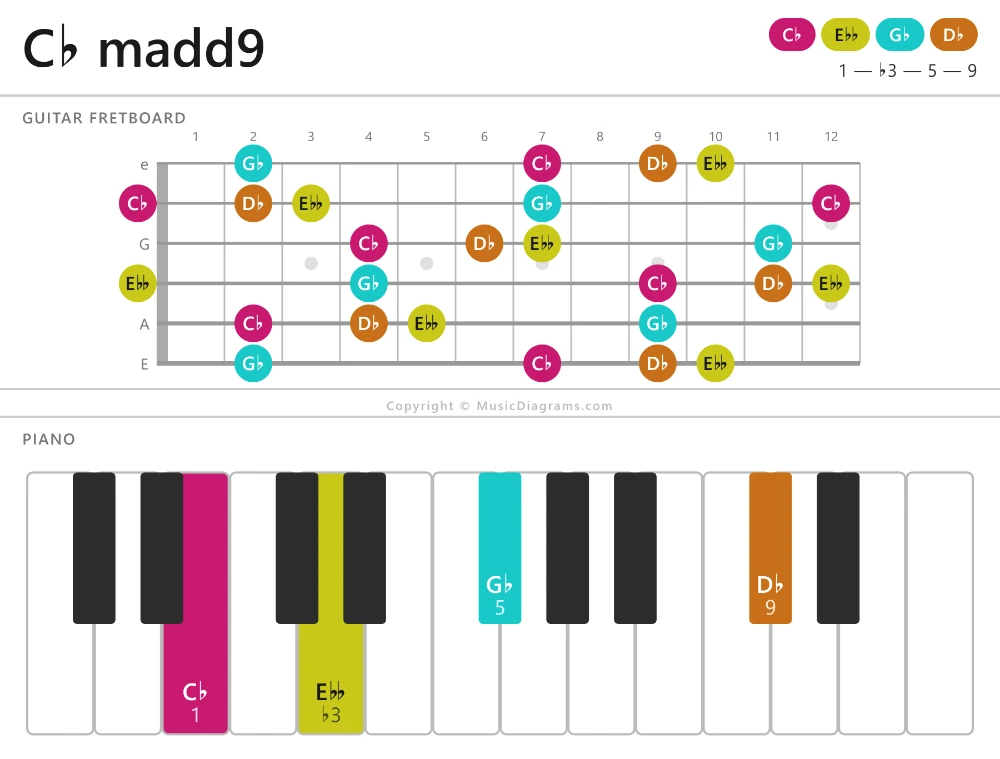
C-flat minor add nine is a Minor chord family chord built from the notes C♭, E♭♭, G♭, and D♭. Its root is C♭, and its interval number formula is 1-♭3-5-9, which gives you the interval names root, minor third, perfect fifth, and major ninth. You may also see it written as C♭m(add9), C♭min(add9), or plain-text spelled as C-flat minor add nine. If you look at the widget above, you can use it to see and hear how these notes combine, and learning a little about chord intervals can make the shape of this chord much easier to understand.
C♭ madd9 Alternate Names
- C♭m(add9)
- C♭min(add9)
- C-flat minor add nine
C♭ madd9 Chord Notes
C♭ madd9 Chord Formula
C♭ madd9 Chord Notation
How To Use C♭ madd9 In Music
Often, C♭ minor add nine sounds gentle, moody, and more colorful than a basic minor chord because the added ninth gives it extra space and shimmer. It can feel reflective, emotional, or slightly dreamy, and the chords around it can change that feeling a lot. For example, moving from iv to i can make it feel settled and expressive, while placing C♭m(add9) in a progression like VI–iv–i can deepen a darker mood. In some songs, it may also appear as a color chord between simpler minor or major harmonies, and understanding the chord root helps beginners hear why C♭ still feels like the home note.
C♭ madd9 Chord Inversions
Another useful idea is inversion, which means rearranging the chord so a note other than the root is the lowest note. For C♭ minor add nine in root position, C♭ is the lowest note, but inversions could place E♭♭, G♭, or D♭ in the bass instead. These versions can sound smoother, softer, or more flowing, especially when connecting one chord to the next. A first-inversion version with E♭♭ in the bass may sound a little more tender, while a version with G♭ or D♭ underneath can feel more open or less final. Musicians use inversions to create better bass movement, reduce jumps between chords, and shape the mood without changing the chord’s basic identity.