The C♯ 7 Chord Explained
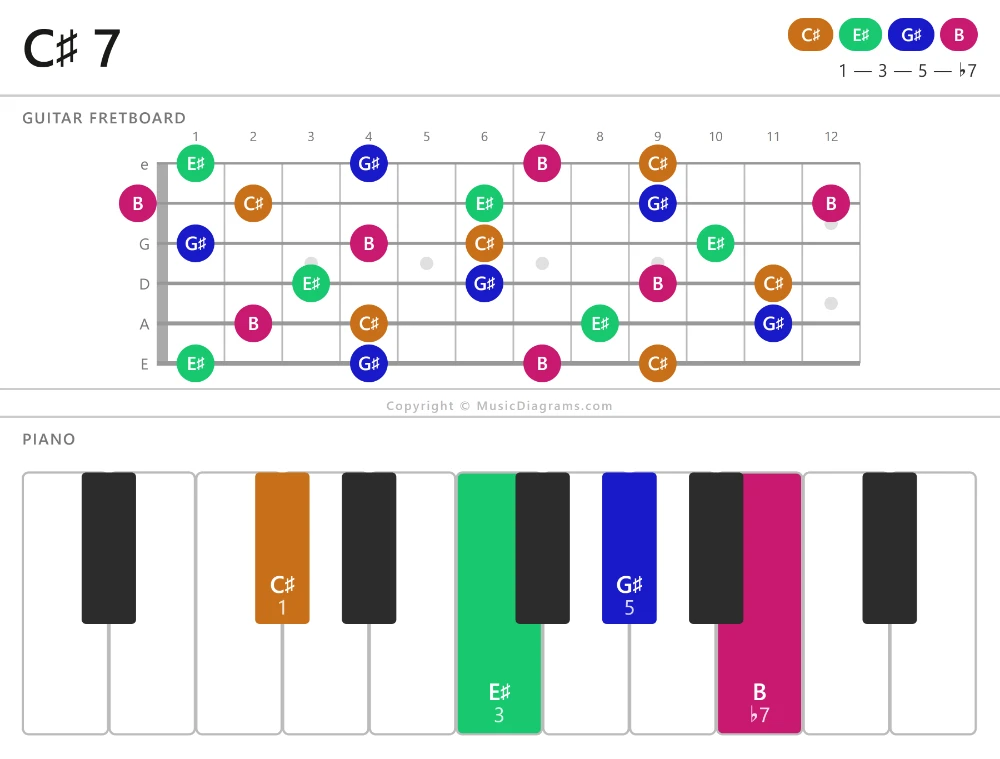
C-sharp dominant seventh is a Dominant chord made from the notes C♯, E♯, G♯, and B. Its root is C♯, which you can spot easily in the widget above as the note the chord is built from. The interval number formula is 1–3–5–♭7, and the interval names are root, major third, perfect fifth, and minor seventh. This chord is also called C♯7, C-sharp 7, or C-sharp dominant 7th. If you are new to how these note distances work, this quick guide to chord intervals can help make the formula easier to understand.
C♯ 7 Alternate Names
- C♯7
- C-sharp 7
- C-sharp dominant 7th
C♯ 7 Chord Notes
C♯ 7 Chord Formula
C♯ 7 Chord Notation
How To Use C♯ 7 In Music
Often, this chord sounds bright, tense, and ready to move, which is why dominant seventh chords are so common in blues, rock, jazz, and pop. C♯7 often creates a feeling of pull toward a chord a fifth below, so it commonly resolves to F♯. For example, in the key of F♯ major, V7–I would be C♯7 to F♯ major. You might also hear it in progressions such as ii–V7–I or I–IV–V7. The chords around it can make it feel more dramatic, bluesy, smooth, or urgent, so its mood depends a lot on what comes before and after it. To learn more about this chord type, see what is a dominant chord.
C♯ 7 Chord Inversions
Another useful idea for beginners is inversion, which means the chord keeps the same notes but starts on a different one. For C♯7 in root position, the notes are C♯–E♯–G♯–B. Its inversions are first inversion: E♯–G♯–B–C♯, second inversion: G♯–B–C♯–E♯, and third inversion: B–C♯–E♯–G♯. These inversions can make the chord sound smoother or less heavy because the lowest note changes, even though the chord quality stays dominant. Musicians use inversions to connect chords more easily, create a gentler bass line, or add variety to a progression without changing the basic harmony.