The C♯ 7sus4 Chord Explained
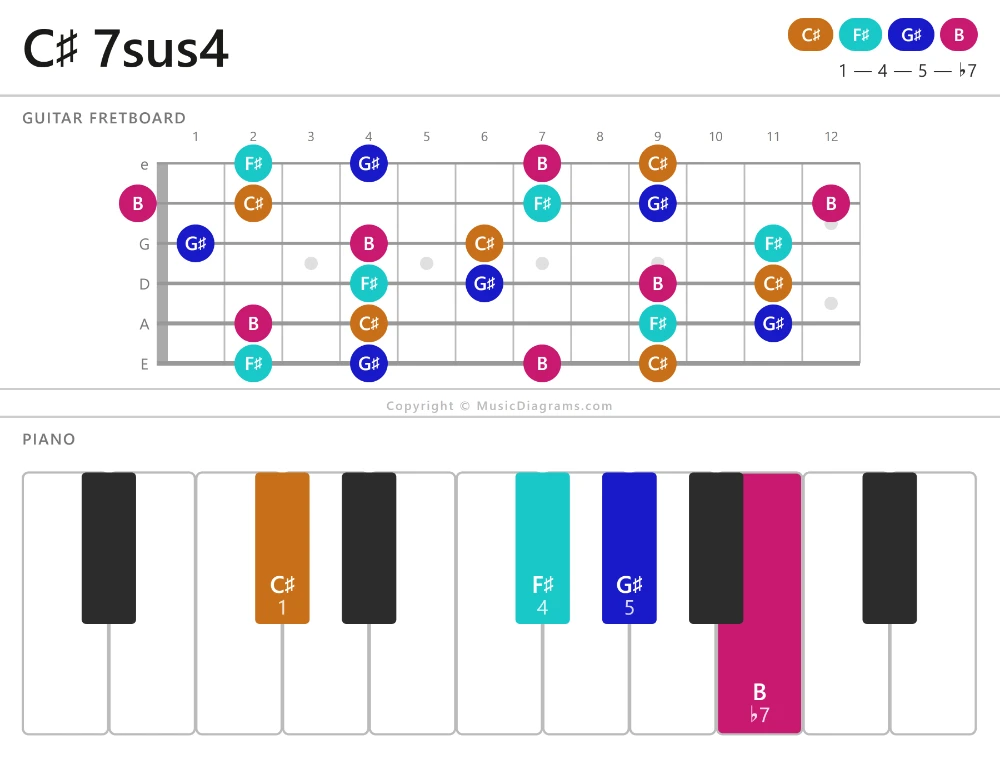
C-sharp dominant seventh suspended fourth is a Suspended chord built from the notes C♯, F♯, G♯, and B. Its root is C♯, and its interval number formula is 1–4–5–♭7, which gives you the interval names root, perfect fourth, perfect fifth, and minor seventh. Because the third is replaced by the fourth, this chord has an open, unresolved sound that is easy to spot on the widget above as you hear and see the notes together. You may also see it written as C♯7sus4, C-sharp 7sus4, or C♯ dominant seventh suspended fourth. If you are new to how chords are built, this guide to chord intervals can help make the formula clearer.

"1-4-5 That's Sus" T-Shirt
Only True Musicians Get This. For musicians in the know. This funny 1-4-5 suspended chord pun shirt is the perfect gift for guitarists, pianists, music teachers, and music nerds.
C♯ 7sus4 Alternate Names
- C♯7sus4
- C-sharp 7sus4
- C-sharp dominant seventh suspended fourth
C♯ 7sus4 Chord Notes
C♯ 7sus4 Chord Formula
C♯ 7sus4 Chord Notation
How To Use C♯ 7sus4 In Music
Because it contains a suspended fourth instead of a major or minor third, C♯7sus4 sounds tense, spacious, and expectant, often making listeners feel that another chord is about to follow. It is commonly used to delay resolution before moving to a regular seventh chord or a more stable harmony, which makes it useful in rock, pop, blues, funk, and gospel. For example, in the key of F♯ major, C♯7sus4 can function as V7sus4 before resolving to C♯7 and then to I, creating a progression like ii–V7sus4–V7–I. In B major, it may appear as II7sus4 leading toward V or vi. The mood of the chord can feel brighter or more dramatic depending on the chords around it, especially when it resolves like a dominant chord would.
C♯ 7sus4 Chord Inversions
Another useful idea for beginners is inversion, which means playing the same chord with a note other than the root at the bottom. For C♯7sus4, root position places C♯ at the bottom, while inversions would place F♯, G♯, or B in the bass. These different bass notes can make the chord feel more flowing, more stable, or more tense, even though the chord quality stays the same. Musicians use inversions to create smoother bass lines, connect chords with less movement, and shape the emotional pull of a progression. A version with B in the bass, for example, can sound especially unsettled and ready to move onward, while one with G♯ in the bass may feel slightly more grounded in a progression.