The D♭ m6 Chord Explained
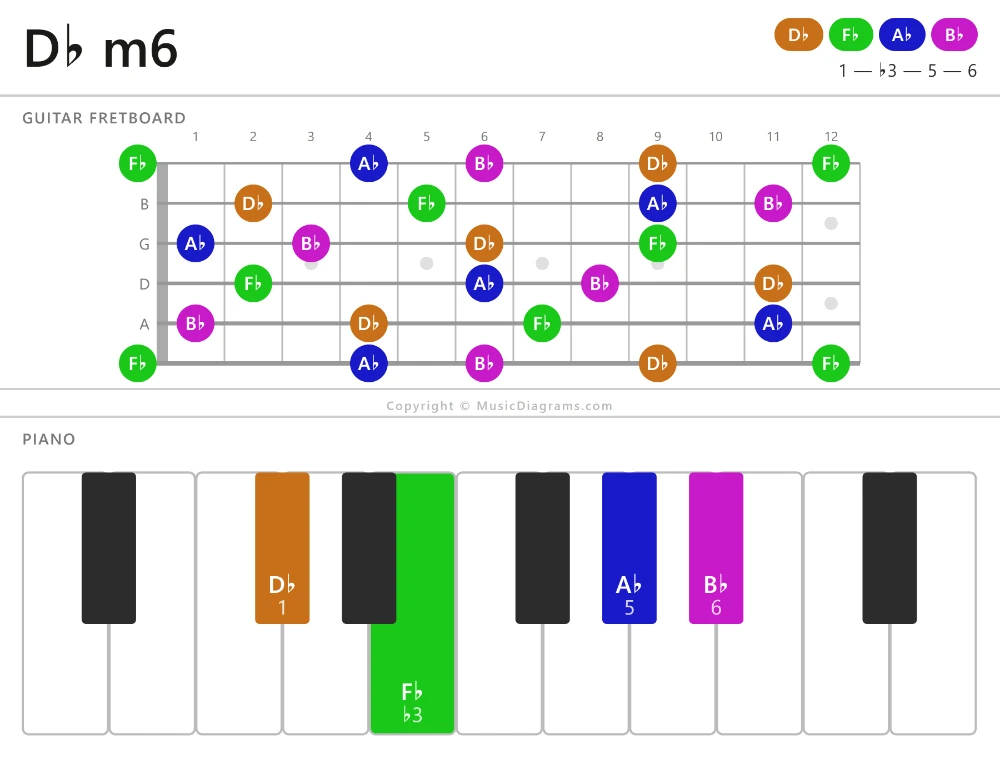
D-flat minor sixth is a Minor chord built from the notes D-flat, F-flat, A-flat, and B-flat. Its root is D-flat, and its interval number formula is 1-♭3-5-6. Those intervals are called the root, minor third, perfect fifth, and major sixth. You may also see this chord written as D♭m6, D-flat minor 6, or D-flat minor sixth. If you look at the widget above, you can use it to see and hear how these four notes combine, and learning a bit about chord intervals can make the structure even easier to understand.
D♭ m6 Alternate Names
- D♭m6
- D-flat minor 6
- D-flat minor sixth
D♭ m6 Chord Notes
D♭ m6 Chord Formula
D♭ m6 Chord Notation
How To Use D♭ m6 In Music
Because it is a minor chord with an added sixth, D-flat minor sixth sounds gentle, reflective, and slightly mysterious, but it can also feel warmer and less dark than a plain minor chord. In songs, it can be used as a color chord in ballads, jazz, film music, or softer pop progressions. Its mood can shift depending on the chords around it: next to brighter chords it may sound wistful, while near darker harmonies it can sound more tense or intimate. For example, in D-flat minor you might hear i–iv–V–i, with D♭m6 used as the i chord for extra color, or in a more modal sound, i–VI–III–VII. If you want a clearer picture of how this chord relates to other minor sounds, this guide to the minor chord can help.
D♭ m6 Chord Inversions
Another useful idea for beginners is inversion, which means the chord keeps the same notes but starts on a note other than the root. For D-flat minor sixth, root position is D-flat, F-flat, A-flat, B-flat. Its inversions place F-flat, A-flat, or B-flat in the bass instead. These can make the chord sound smoother, softer, or more connected to the next chord, especially when you want the bass line to move step by step. A first-inversion shape may feel a little lighter, while an inversion with B-flat in the bass can sound more open or less settled. Composers and players use inversions to improve voice leading, reduce big jumps between chords, and create a different emotional shade without changing the chord’s basic identity.