The E add9 Chord Explained
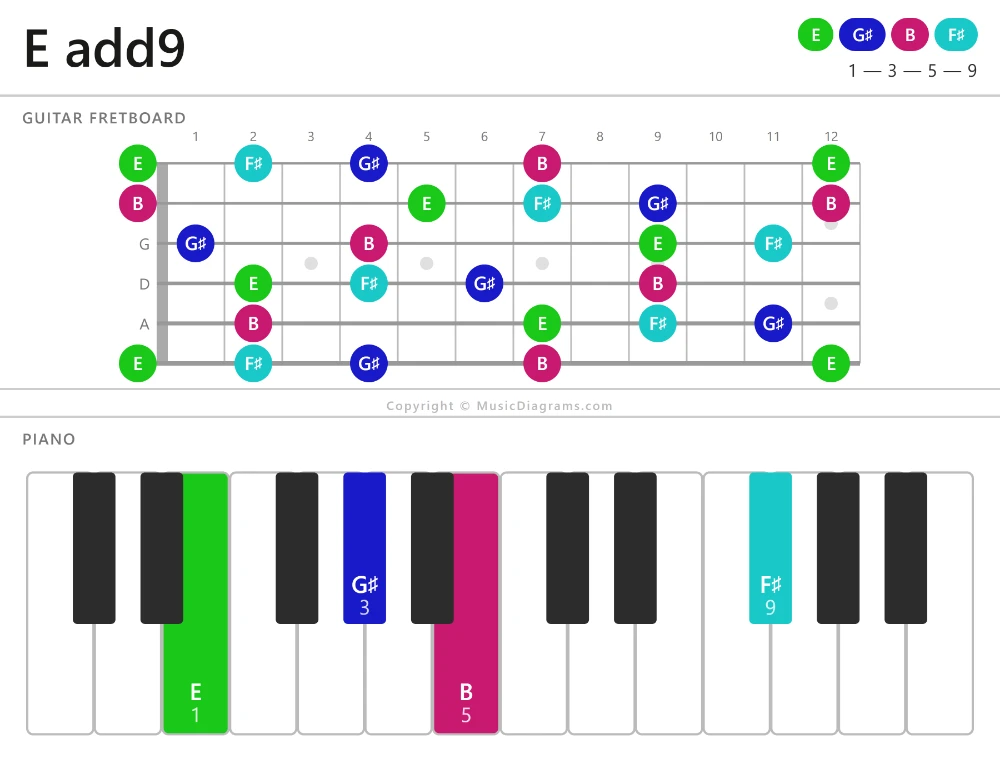
E add9 is an added-note chord in the Major family because it is built from a major triad with one extra color note added on top. Its notes are E, G♯, B, and F♯. The root is E, which is the note the chord is named after, and you can learn more about that in this guide to chord roots. The interval number formula is 1–3–5–9, and the interval names are root, major third, perfect fifth, and major ninth. You may also see this chord written as E(add9), Eadd9, or plain-text spelling E added ninth.
E add9 Alternate Names
- E(add9)
- Eadd9
- E added ninth
E add9 Chord Notes
E add9 Chord Formula
E add9 Chord Notation
How To Use E add9 In Music
Often, E add9 sounds bright, open, and spacious because the added ninth gives the basic E major chord a more colorful and airy quality without making it feel harsh. It can create a hopeful, reflective, or modern mood, and its effect can change depending on the chords around it. For example, in a progression like I–V–vi–IV in E major, the E add9 chord can appear as I, followed by B, C♯ minor, and A. It can also work nicely in a gentler pattern such as I–IV–V, where E add9 leads to A and B. If you want to better understand why the notes work together, this overview of chord intervals is helpful. Using the widget above, you can see and hear how the added F♯ gives the chord its extra shimmer.
E add9 Chord Inversions
Another useful idea is inversion, which means the notes of the chord stay the same but a note other than the root is placed in the bass. For E add9, root position has E as the lowest note, while inversions could place G♯, B, or even F♯ in the bass. These different bass notes can make the chord feel more stable, softer, or more flowing, even though it is still the same chord. Musicians use inversions to create smoother motion between chords, reduce big jumps in the bass, and shape the emotional pull of a progression. You may also hear related variations such as plain E major, Eadd2, or Emaj9, each of which changes the color in its own way.