The F 6 Chord Explained
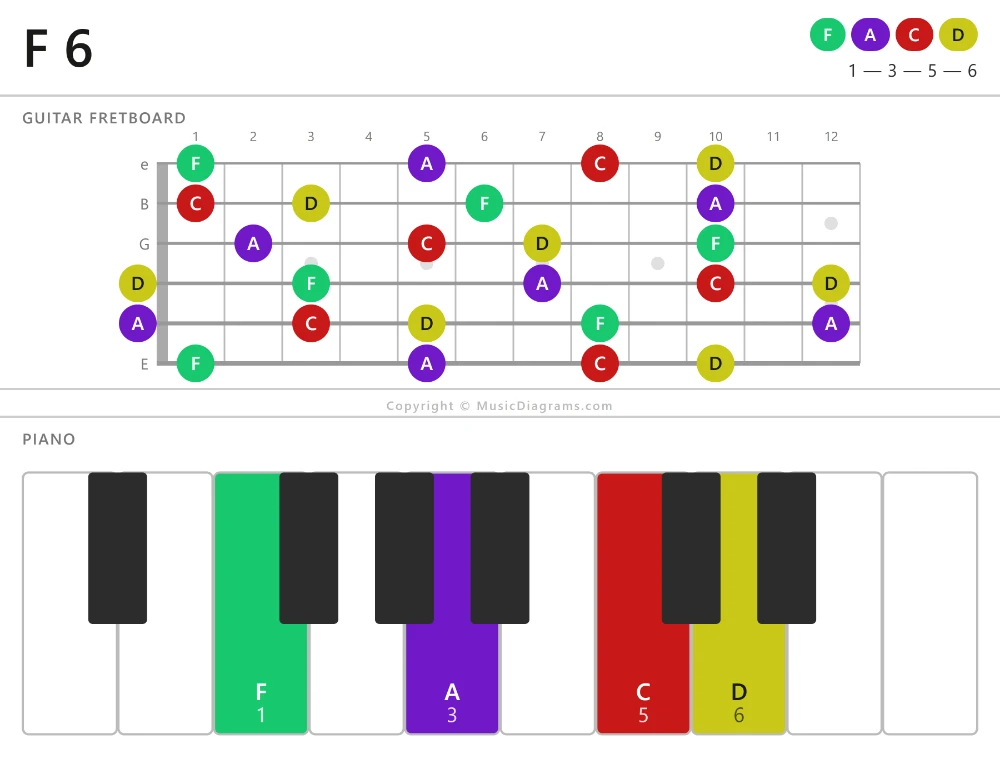
F sixth is a Major chord family chord made from the notes F, A, C, and D. Its root is F, and its interval number formula is 1-3-5-6. These intervals are called the root, major third, perfect fifth, and major sixth. You may also see this chord written as F6, F add 6, or plain-text spelling as F sixth. If you look at the widget above, you can see and hear how these four notes work together, and learning a bit about chord intervals can make the structure even easier to understand.
F 6 Alternate Names
- F6
- F add 6
- F sixth
F 6 Chord Notes
F 6 Chord Formula
F 6 Chord Notation
How To Use F 6 In Music
Often, F6 sounds warm, relaxed, and slightly jazzy compared with a plain F major chord. It keeps the bright and stable feeling of a major chord, but the added sixth gives it a softer, more colorful character. This chord can work well at the end of a song instead of a plain I chord, or as a gentle color chord in styles like pop, jazz, swing, and older ballads. For example, in the key of F major, you might hear I–IV–V–I, with F6 used on the final I for a smoother finish. In C major, it could appear in a progression like ii–V–IV, where F6 adds sweetness and warmth. Its mood can feel more settled or more expressive depending on whether the surrounding chords create tension or release, especially compared with a plain major chord.
F 6 Chord Inversions
Because F6 has four notes, it can also be played in different inversions, which means a note other than F is placed at the bottom. In root position, F is the lowest note, but you can also use first inversion with A in the bass, second inversion with C in the bass, or another voicing with D in the bass. These changes do not rename the basic chord in many common uses, but they do change its weight and color. An inversion can make the chord sound lighter, smoother, or better connected to the chord before or after it. Players use inversions to create stepwise bass lines, reduce big jumps between chords, and give a progression a more polished sound.