The F m7 Chord Explained
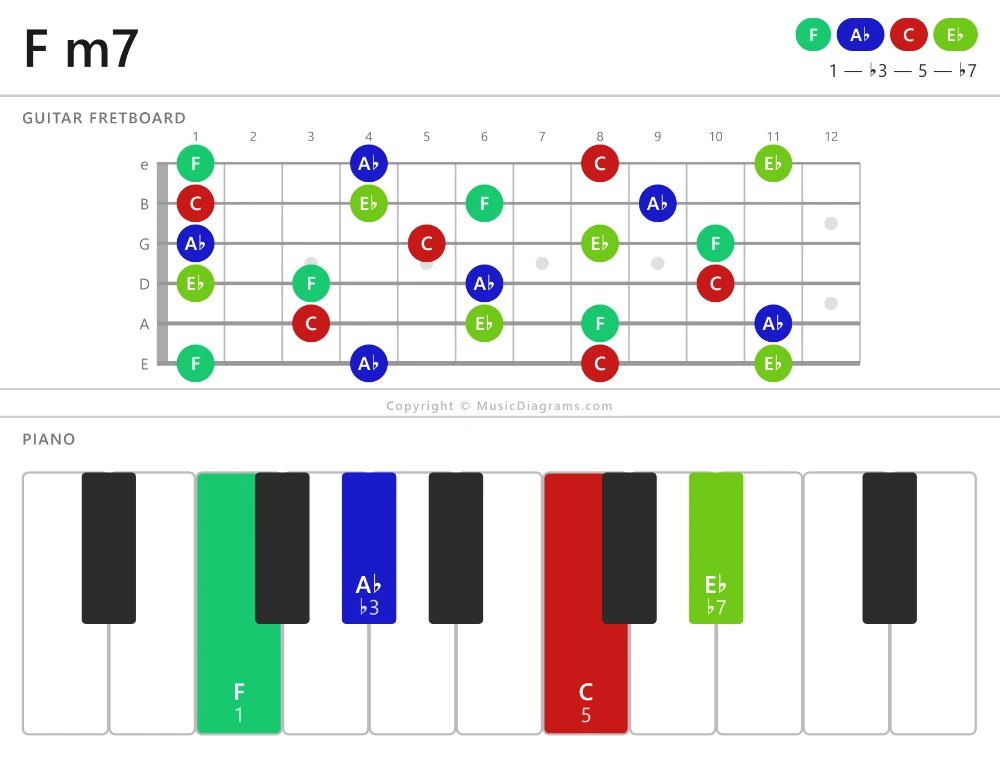
F minor seventh is a Minor chord family chord built from the notes F, A♭, C, and E♭. Its root is F, and its interval number formula is 1-♭3-5-♭7, which gives you the interval names root, minor third, perfect fifth, and minor seventh. You may also see this chord written as Fm7, Fmin7, or F-7, all of which mean the same basic sound. If you look at the widget above, you can see and hear how these four notes combine, and you can learn more about how chords are built by exploring chord intervals.
F m7 Alternate Names
- Fm7
- Fmin7
- F-7
F m7 Chord Notes
F m7 Chord Formula
F m7 Chord Notation
How To Use F m7 In Music
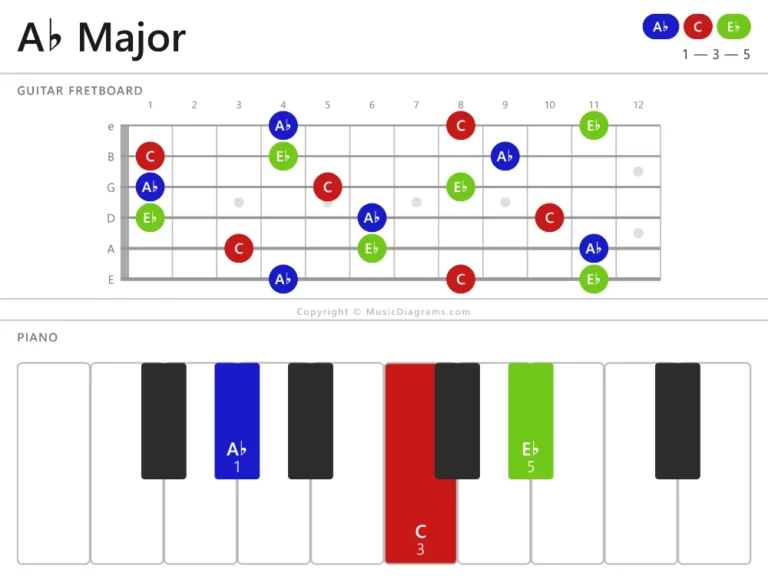
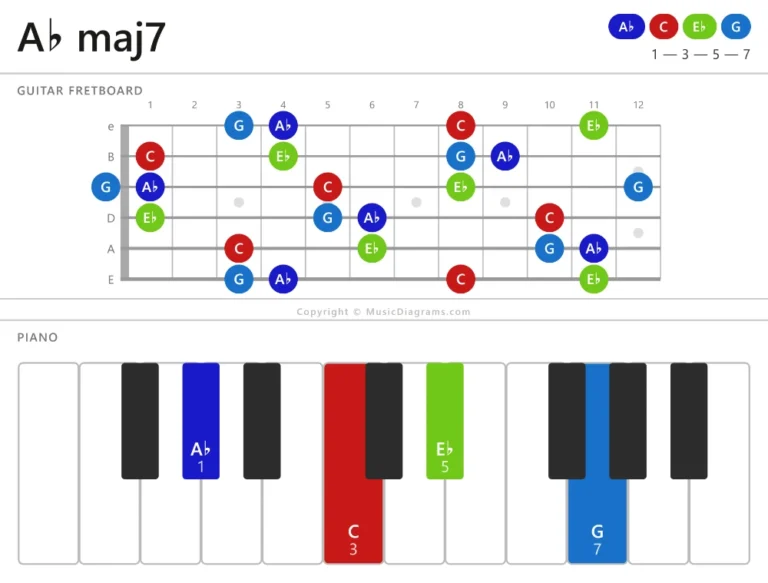
Often, Fm7 sounds smooth, warm, and slightly melancholic, but it can also feel soulful, jazzy, or relaxed depending on the chords around it. On its own, it has a softer and richer color than a plain minor triad because of the added E♭. In progressions, it commonly appears as ii in E♭ major, such as Fm7-B♭7-E♭maj7, or as vi in A♭ major, such as A♭maj7-Fm7-B♭m7-E♭7. It can also work in minor-key progressions like Cmin7-Fm7-G7-Cm, where it adds depth and motion. When placed before a tense chord or after a brighter chord, its mood can feel either more dramatic or more gentle, which is one reason it is so useful in many styles.
F m7 Chord Inversions
Another helpful idea for beginners is inversion, which means the chord keeps the same notes but starts on a different one. For Fm7, root position is F-A♭-C-E♭, while inversions include A♭-C-E♭-F, C-E♭-F-A♭, and E♭-F-A♭-C. These inversions do not change the chord’s name at its core, but they do change the bass note and the overall feel. An inversion can sound smoother, less heavy, or more connected to the next chord, which is why players use them to make progressions flow better. You can also compare its color with other minor sounds by reading about what is a minor chord.