The F Major Chord Explained
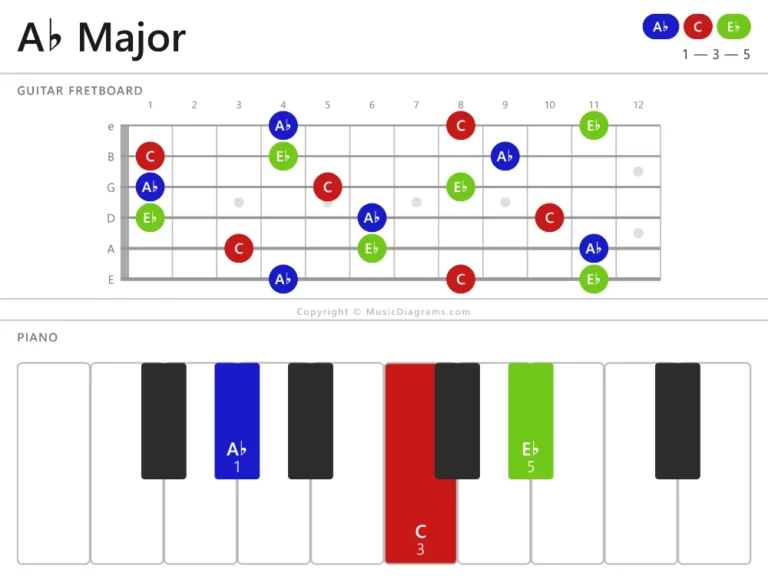
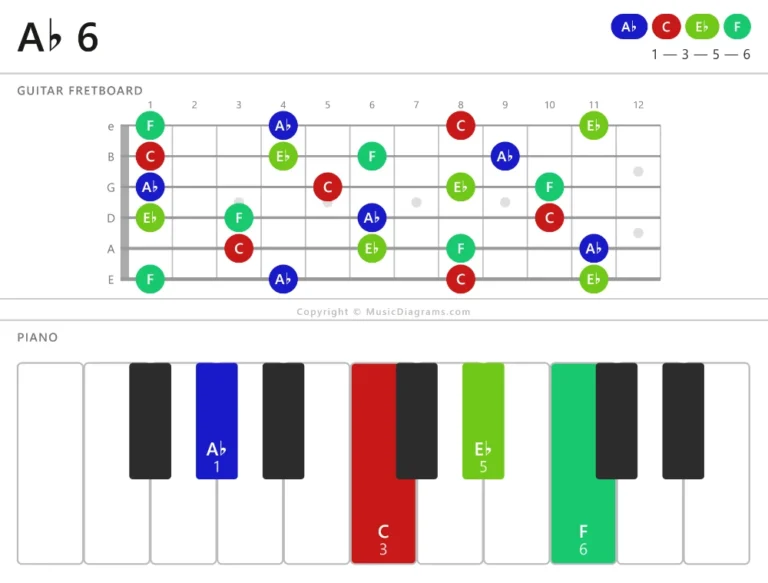
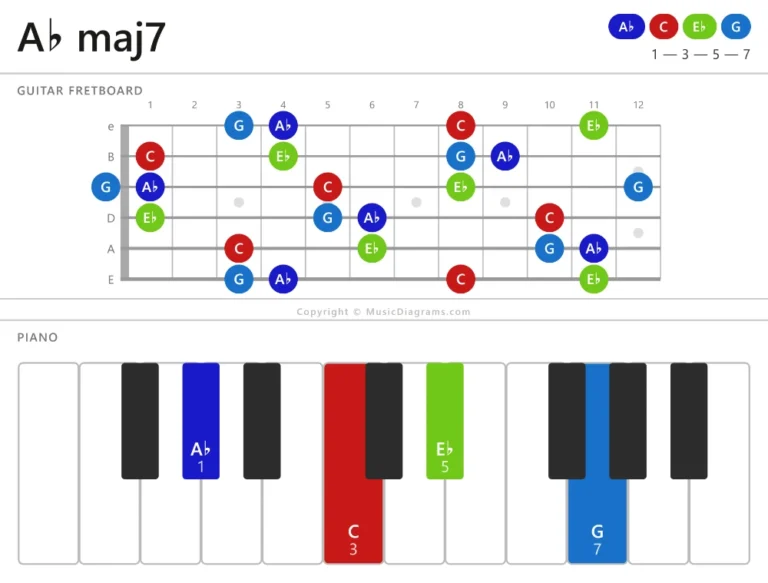
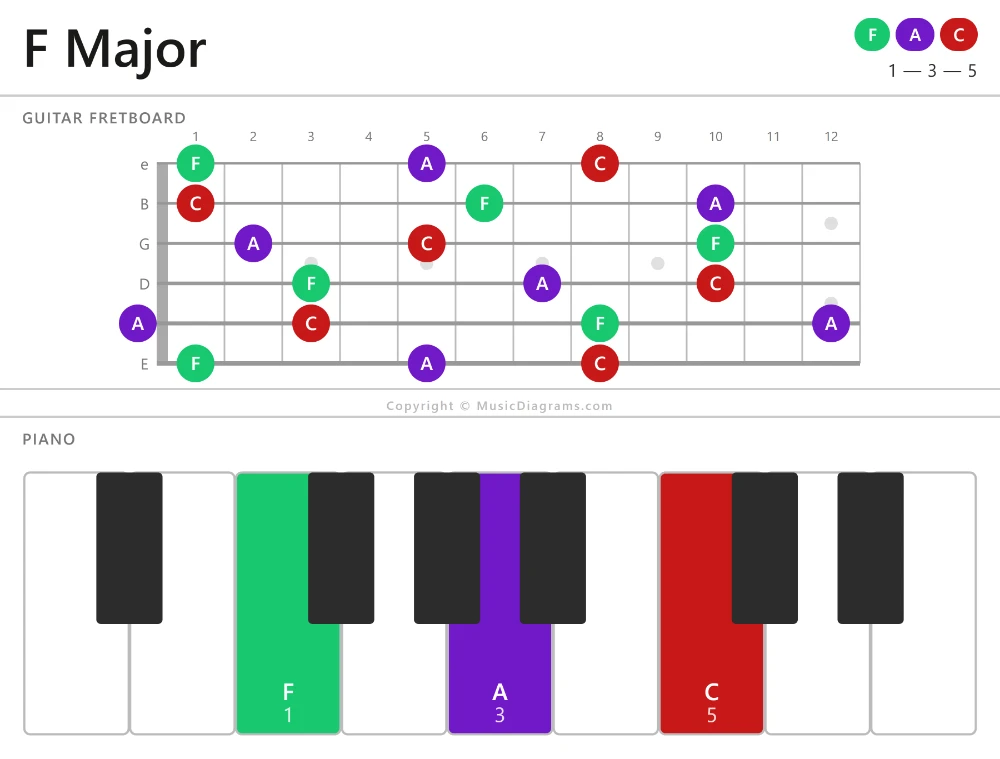
F major is a Major chord built from the notes F, A, and C. Its root is F, and its interval number formula is 1–3–5, which gives you the interval names root, major third, and perfect fifth. This simple structure is one reason it sounds so clear and stable. If you look at the widget above, you can see and hear these three chord tones clearly, which is a great way to connect the shape of the chord to its sound. F major may also be written as F, F major, or FM, and if you want to learn more about how these note distances work, see chord intervals.
F Major Alternate Names
- F
- F major
- FM
F Major Chord Notes
F Major Chord Formula
F Major Chord Notation
How To Use F Major In Music
Often, F major sounds warm, bright, steady, and confident, which makes it useful in countless songs across pop, rock, folk, country, and classical music. It can feel restful on its own, but its mood also depends on the chords around it. In the key of F major, it appears as I, so a progression like I–IV–V–I would be F–B-flat–C–F. In the key of C major, F major becomes IV, so a common pattern is I–IV–V–I, or C–F–G–C. Next to minor chords it can sound more emotional, while beside other major chords it often feels open and uplifting. You can also explore how it relates to other bright harmonies by reading about major chords.
F Major Chord Inversions
Another useful idea for beginners is inversion, which means the same chord tones are rearranged so a note other than the root is the lowest pitch. F major in root position is F–A–C, first inversion is A–C–F, and second inversion is C–F–A. These inversions still contain the same notes, but they can change the color and flow of the chord. First inversion often sounds a little lighter or smoother, while second inversion can feel more open or slightly less settled. Musicians use inversions to create better voice leading, smoother bass motion, and more connected chord progressions, even though the chord is still fundamentally F major.