The F♯ add9 Chord Explained
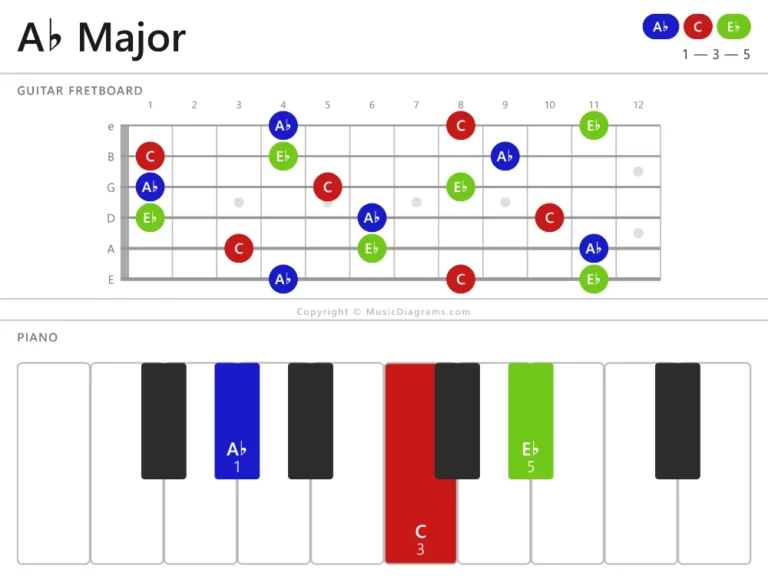
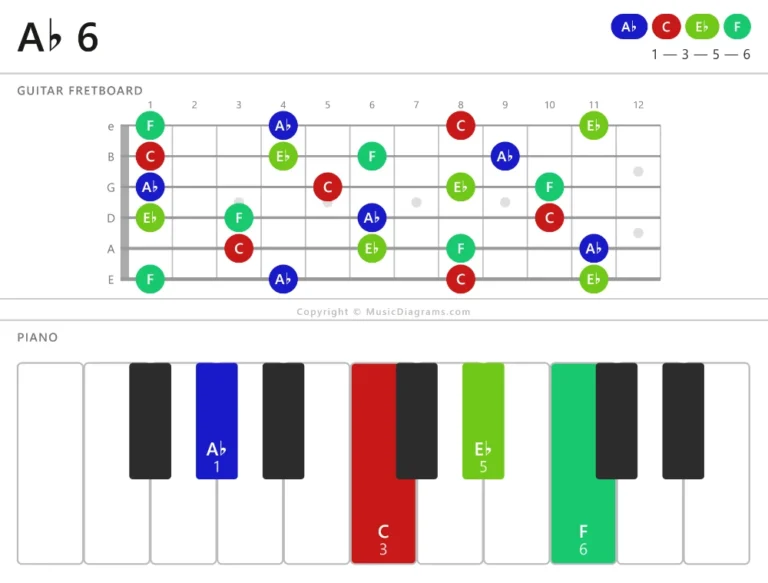
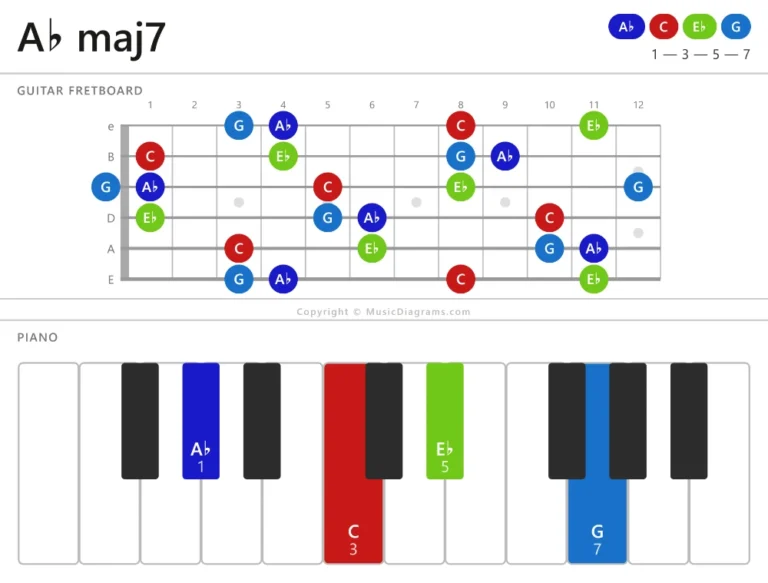
F-sharp add nine is an Add chord in the Major family because it is built from a major triad with an added ninth for extra color. Its notes are F♯, A♯, C♯, and G♯. The root is F♯, which you can trace in the diagram above if you want help spotting the chord’s starting point. Its interval number formula is 1–3–5–9, and the interval names are root, major third, perfect fifth, and major ninth. You may also see it written as F♯add9, F♯ add 9, or F-sharp added ninth. If you are new to how these distances work, understanding chord intervals can make this chord much easier to recognize.
F♯ add9 Alternate Names
- F♯add9
- F♯ add 9
- F-sharp added ninth
F♯ add9 Chord Notes
F♯ add9 Chord Formula
F♯ add9 Chord Notation
How To Use F♯ add9 In Music
Often, F♯ add9 sounds bright, open, and slightly shimmering because the added ninth gives the major chord a more spacious color without making it sound especially tense. It can set a hopeful, reflective, or modern mood, and the feeling can change depending on the chords around it. For example, in the key of F♯ major, F♯add9 can act as I in a progression like I–V–vi–IV, while in a gentler loop it might appear as I–ii–IV–I. If the surrounding chords are simple major chords, F♯ add9 may sound warm and uplifting; if it sits near darker harmony such as minor chords, its sweetness can feel more emotional or dreamy. You can compare that brighter major quality with what is a major chord to hear what the added ninth changes.
F♯ add9 Chord Inversions
Because this chord contains four notes, it can be rearranged into inversions by placing a note other than F♯ in the bass. In root position, F♯ is the lowest note; in first inversion, A♯ is lowest; in second inversion, C♯ is lowest; and in third inversion, G♯ is lowest. These versions still use the same chord tones—F♯, A♯, C♯, and G♯—but they can feel different. A root-position voicing sounds the most settled, while inversions can sound smoother, lighter, or more flowing, especially when moving from one chord to the next. Players use inversions to create better voice-leading, reduce big jumps between chords, and shape the mood so the harmony feels either more stable or more gently suspended.