The G 6 Chord Explained
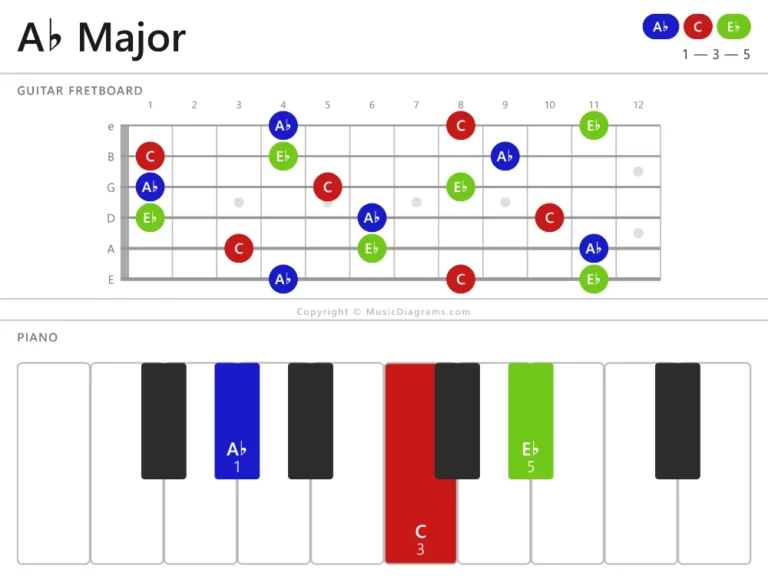
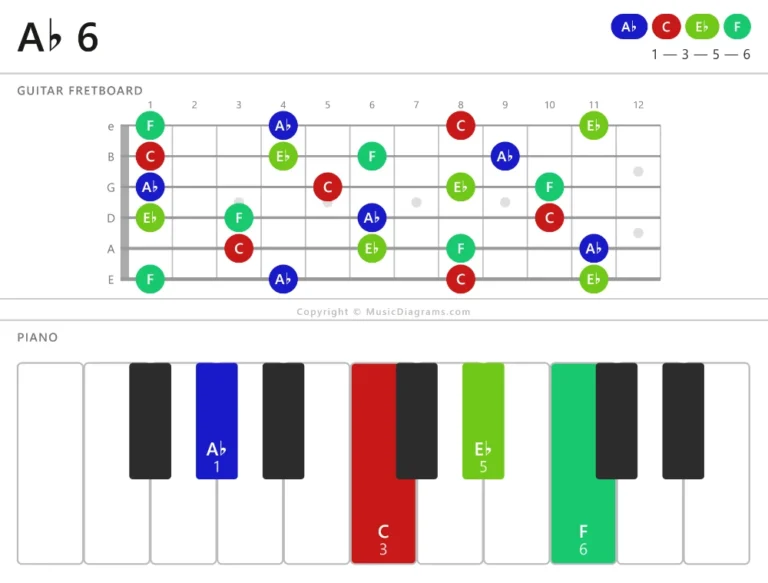
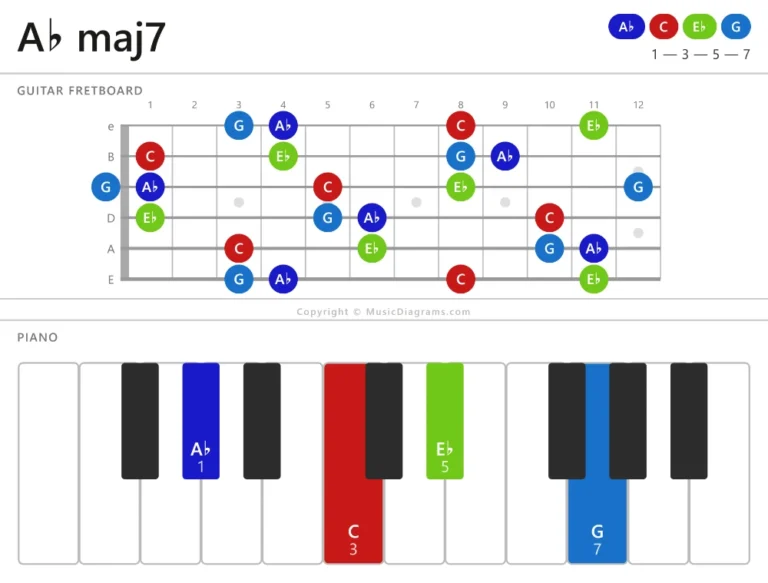
G sixth is a Major chord family color chord built from the notes G, B, D, and E. Its root is G, and its interval number formula is 1–3–5–6, which gives you the interval names root, major third, perfect fifth, and major sixth. You may also see it called G6, G major sixth, or G add 6 in some beginner-friendly contexts, although G6 is the most common label. If you look at the widget above, you can see and hear how these four notes combine, and learning a little about chord intervals makes it much easier to understand why this chord has such a smooth, colorful sound.
G 6 Alternate Names
- G6
- G major sixth
- G add 6
G 6 Chord Notes
G 6 Chord Formula
G 6 Chord Notation
How To Use G 6 In Music
Often, G6 sounds warm, bright, gentle, and slightly more relaxed than a plain G major chord because the added E softens the basic major sound. It can fit well in pop, jazz, folk, country, and film music when you want a chord that feels settled but not too final. Its mood can also change depending on the chords around it: next to C major it may sound sweet and open, while near E minor it can feel more reflective. For example, in the key of G major you might hear I–IV–V–I with G6 used as the tonic color chord, or a progression such as I–vi–ii–V where G6 replaces the I chord for extra richness. Because the root is still G, it keeps a strong home-base feeling, which is easier to grasp when you understand the chord root.
G 6 Chord Inversions
Another useful idea is inversion, which means keeping the same chord notes but placing a note other than G at the bottom. In root position, G is the lowest note; in first inversion, B is lowest; in second inversion, D is lowest; and in third inversion, E is lowest. These versions can make G6 sound smoother, lighter, or more flowing, especially when connecting from one chord to another with less movement in the bass. For instance, a G6/B can glide neatly into C major, while G6/E can sound especially soft and mellow. Players use inversions to improve voice leading, create a different bass line, and shape the mood without changing the basic identity of the chord.