The G♭ 6 Chord Explained
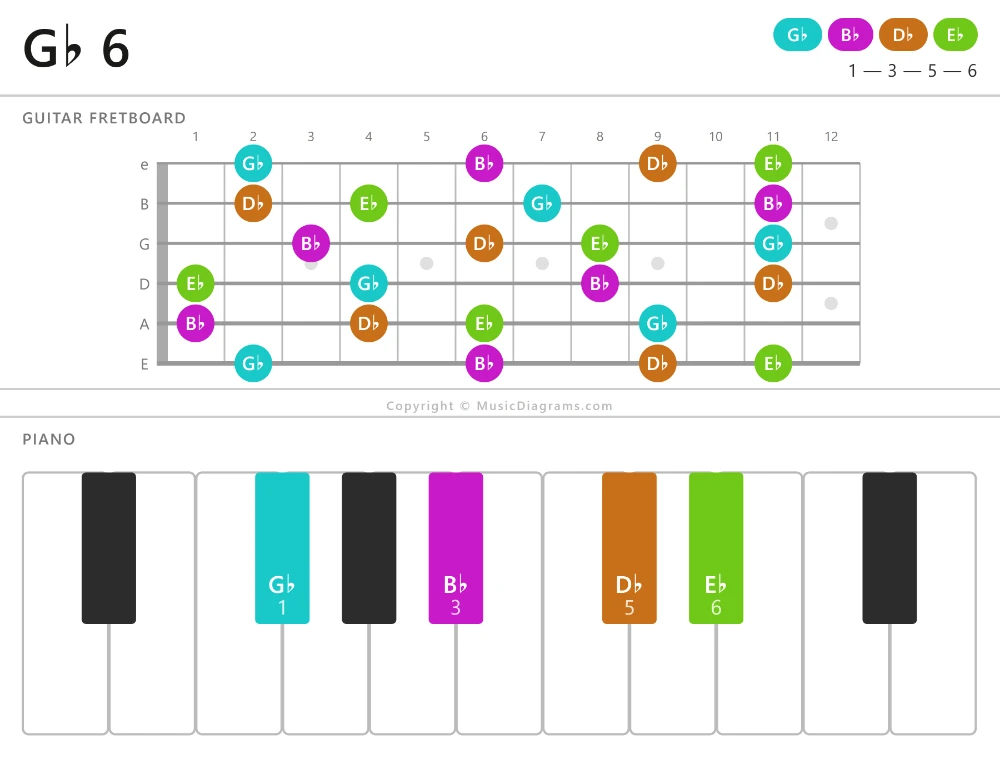
G-flat six is a Major chord family chord built from the notes G-flat, B-flat, D-flat, and E-flat. Its root is G-flat, and its interval number formula is 1-3-5-6, which gives you the interval names root, major third, perfect fifth, and major sixth. You may also see it written as G-flat major sixth, G-flat 6, or G-flat add 6. If you look at the widget above, you can match these notes on piano or guitar and hear how the added sixth changes the basic major sound. To learn more about how these note distances work, see chord intervals.
G♭ 6 Alternate Names
- G-flat major sixth
- G-flat 6
- Gb6
G♭ 6 Chord Notes
G♭ 6 Chord Formula
G♭ 6 Chord Notation
How To Use G♭ 6 In Music
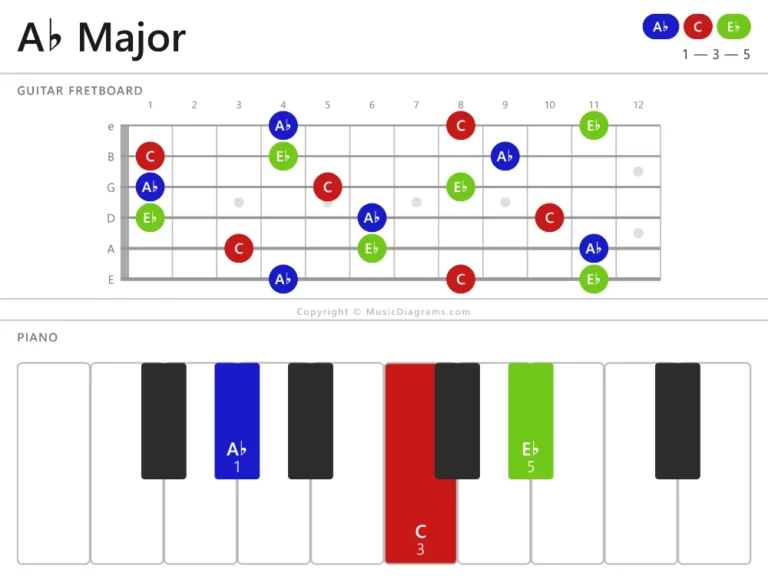
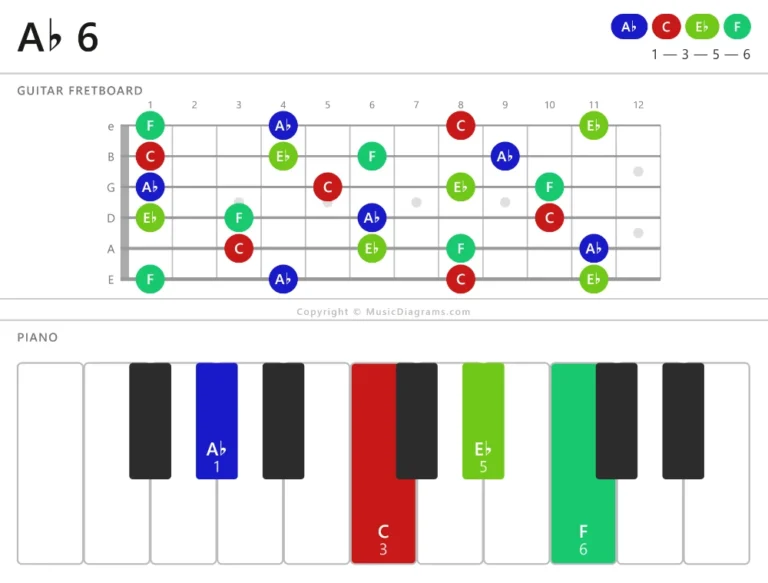
Often, this chord sounds warm, gentle, and settled, with a slightly richer color than a plain G-flat major chord. The added E-flat gives it a sweet, relaxed character that works well in pop, jazz, soul, and ballads. Its mood can feel more restful when it resolves to or from other smooth-sounding chords, but the feeling can shift depending on the harmony around it. For example, in the key of G-flat major, G-flat 6 can appear as I in a progression like I–vi–ii–V, or it may follow IV and lead back home in IV–I–V. Because it belongs to the major sound world, it can also be helpful to compare it with a major chord to hear what the sixth adds.
G♭ 6 Chord Inversions
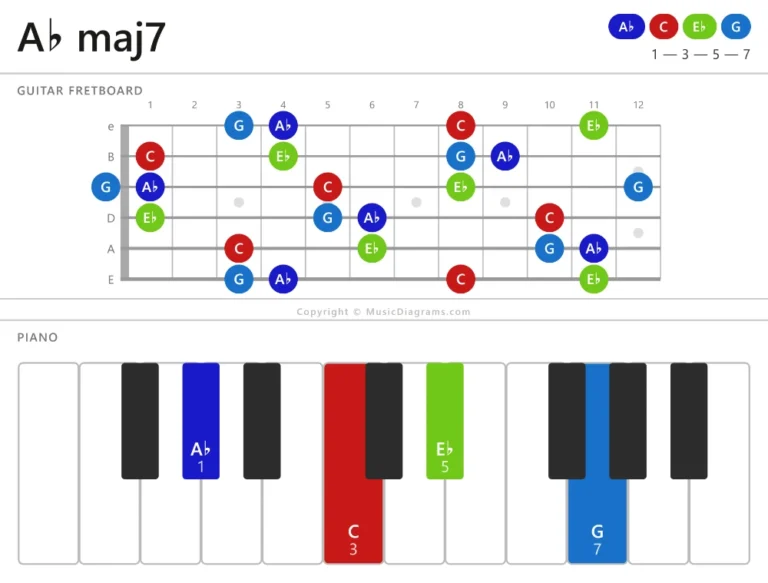
Inversions happen when a note other than the root is the lowest note. For G-flat 6, root position places G-flat at the bottom, while inversions would put B-flat, D-flat, or E-flat in the bass. These changes do not alter the chord’s basic identity, but they do change its weight, smoothness, and sense of motion. A B-flat bass can sound lighter and more flowing, a D-flat bass can feel stable yet less final than the root, and an E-flat bass can sound especially soft or jazzy. Musicians use inversions to create smoother bass lines, connect chords with less jumping, and shape the mood of a progression more naturally. You may also hear close variations such as a plain G-flat major chord or a G-flat major seventh nearby, each giving a slightly different color.