The G♯ 13 Chord Explained
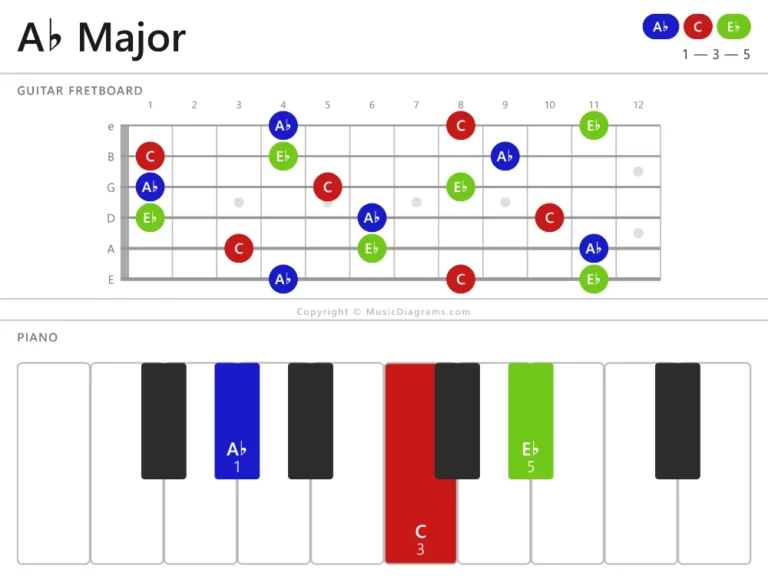
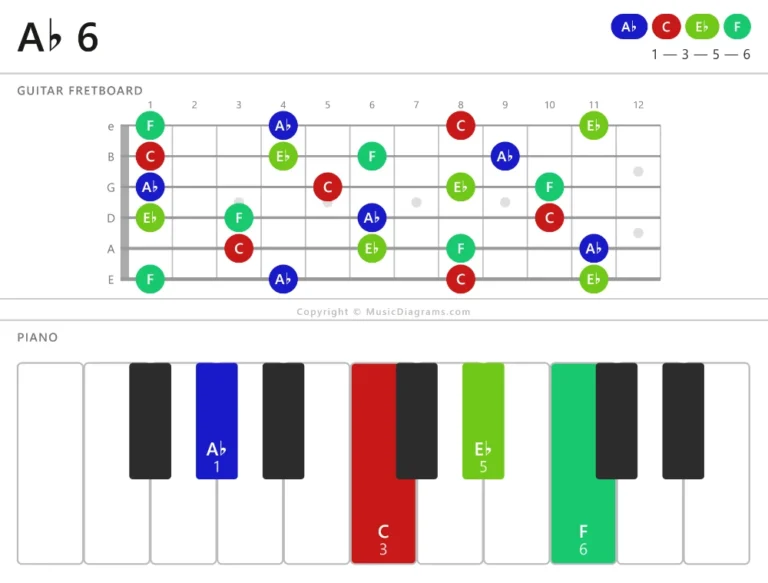
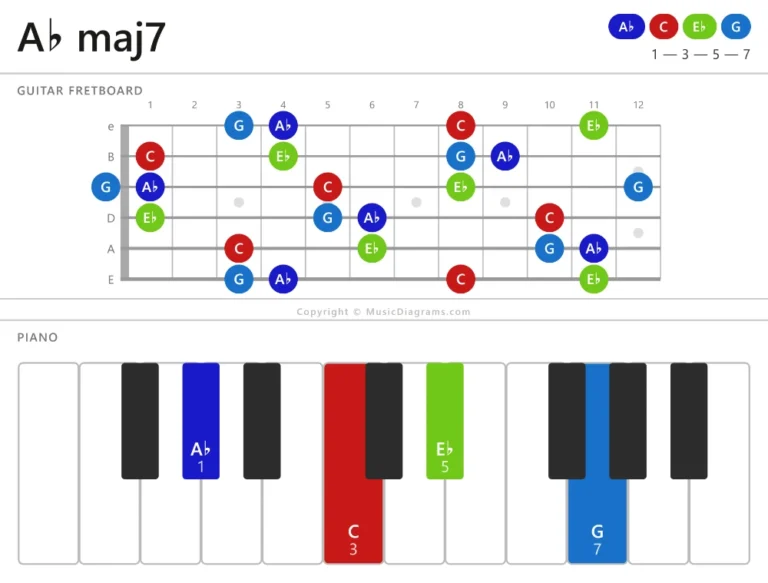
G-sharp thirteenth is a Dominant chord family sonority built from the notes G♯, B♯, D♯, F♯, A♯, C♯, and E♯. Its root is G♯, and its interval number formula is 1–3–5–♭7–9–11–13. In interval names, that gives you root, major third, perfect fifth, minor seventh, major ninth, perfect eleventh, and major thirteenth. You may also see it written as G♯13, G♯dom13, or plain-text spelling G-sharp dominant thirteenth. If you look at the widget above, you can match these chord tones on the piano and guitar diagrams, and hearing them together can also help you understand how stacked extensions grow from a basic chord.
G♯ 13 Alternate Names
- G♯13
- G♯dom13
- G-sharp dominant thirteenth
G♯ 13 Chord Notes
G♯ 13 Chord Formula
G♯ 13 Chord Notation
How To Use G♯ 13 In Music
Because it contains a major triad plus a minor seventh and colorful upper extensions, G♯13 sounds rich, tense, jazzy, and forward-moving. It often creates a strong pull toward a chord built a fourth above or a fifth below, so it works naturally as a dominant-function chord. For example, in C♯ major, G♯13 can act as V in a progression like ii–V–I, or D♯m7–G♯13–C♯maj7. In F♯ major, it might appear as II in a brighter color progression such as G♯13–C♯9–F♯maj7. The mood of the chord can feel smoother if the surrounding harmony is jazzy and extended, or more dramatic if it resolves clearly into the next chord. To better grasp why these notes create that pull, it helps to study chord intervals.
G♯ 13 Chord Inversions
Another useful idea for beginners is inversion, which means the same chord tones are used but a note other than the root is placed in the bass. For G♯13, an inversion might put B♯, D♯, or F♯ underneath instead of G♯. This can make the chord sound less final, more flowing, or easier to connect smoothly to nearby chords. Players also use practical variations that keep the dominant thirteenth color but leave out some notes, because seven-note chords are often too large to play all at once. A common variation might emphasize G♯, F♯, B♯, and E♯, while another might include the 9th but omit the 11th for a clearer texture. These choices help shape the mood, reduce clutter, and create smoother voice-leading in progressions.