The G♯ 6 Chord Explained
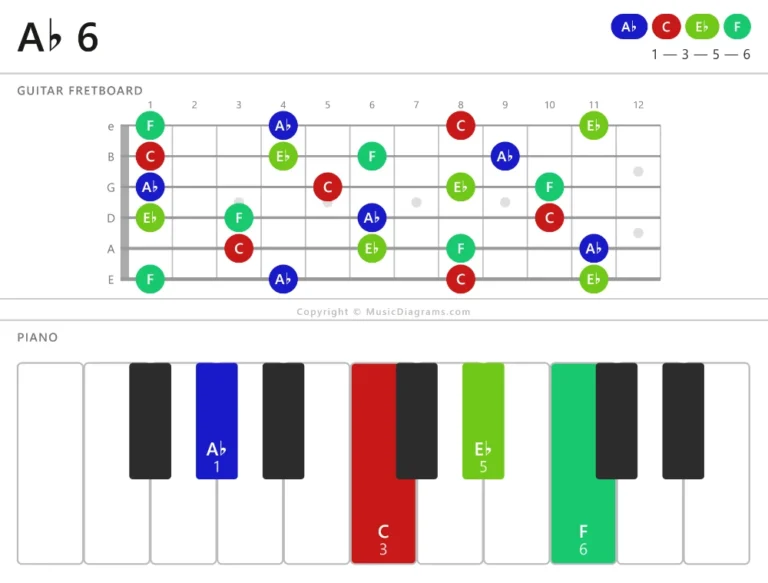
G-sharp sixth is a Major chord family chord built from the notes G♯, B♯, D♯, and E♯. Its root is G♯, and its interval number formula is 1-3-5-6, which gives you the interval names root, major third, perfect fifth, and major sixth. You may also see it written as G♯6, Gsharp6, or G-sharp major sixth. If you look at the widget above, you can use the piano and guitar diagrams to visualize these chord tones and hear how they combine. To better understand how these notes are stacked, see chord intervals.
G♯ 6 Alternate Names
- G♯6
- G-sharp major sixth
- Gsharp6
G♯ 6 Chord Notes
G♯ 6 Chord Formula
G♯ 6 Chord Notation
How To Use G♯ 6 In Music
Often, this chord sounds warm, bright, smooth, and slightly jazzy because the added sixth gives a major triad a softer color than a plain major chord. G♯6 can work as a stable home chord or as a colorful passing sound in progressions, and its mood can feel sweeter or more reflective depending on the chords around it. For example, in a major-key setting it might appear as I–vi–ii–V with G♯6 as the I, or in a pop-style loop you might hear I–V–vi–IV with G♯6 used instead of a plain tonic chord. When placed near tenser chords, it can sound more elegant and relaxed by contrast; when surrounded by other gentle major chords, it can feel lush and calm. If you want a helpful comparison point, a plain major chord sounds more direct and less colorful.
G♯ 6 Chord Inversions
Another useful idea for beginners is inversion, which means keeping the same chord tones but putting a note other than the root at the bottom. For G♯6, root position has G♯ as the lowest note, while inversions place B♯, D♯, or E♯ in the bass. These changes can make the chord sound smoother, lighter, or more flowing, especially when connecting from one chord to the next. Musicians use inversions to reduce large jumps between bass notes, create a gentler accompaniment, or shape the musical mood without changing the basic chord quality. You may also hear close variations in real music, such as a simpler G♯ major or richer extended voicings based on G♯6, but the core color still comes from the 1-3-5-6 structure.