The G♯ 7♭9 Chord Explained
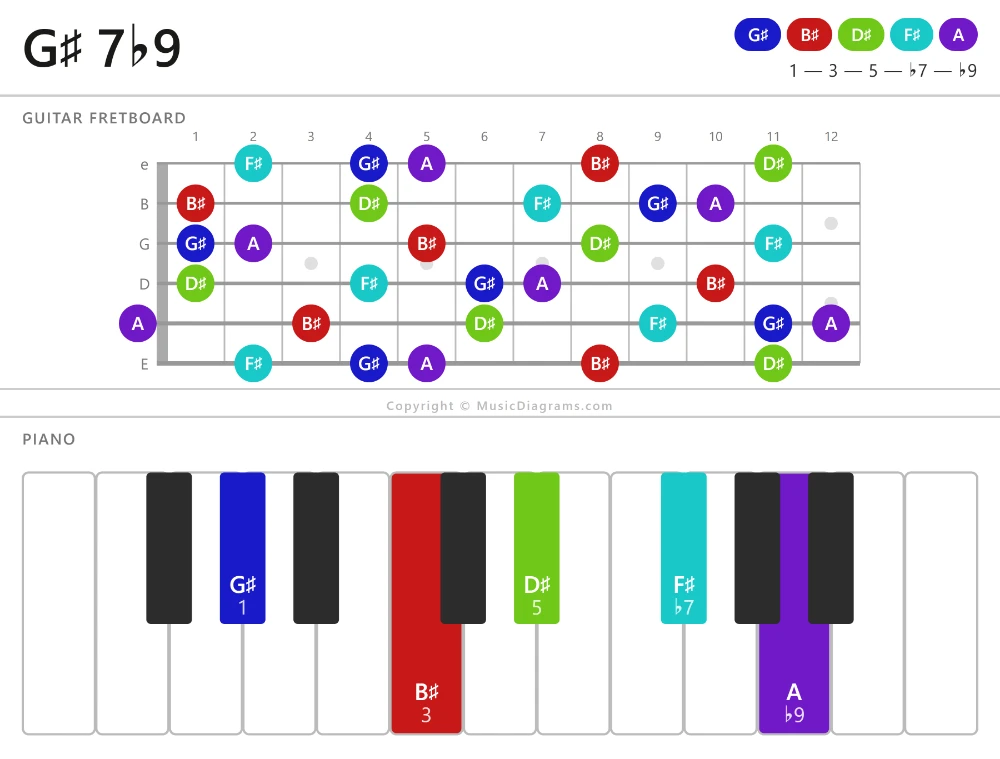
G-sharp seven flat nine is a Dominant chord built from the notes G♯, B♯, D♯, F♯, and A. Its root is G♯, which is the note the chord is named after, and you can learn more about that in this guide to chord roots. The interval number formula is 1–3–5–♭7–♭9, which gives you the interval names root, major third, perfect fifth, minor seventh, and minor ninth. Because it contains a major triad plus a minor seventh, it belongs to the Dominant family, with the added ♭9 creating extra tension and color. You may also see it written as G♯7♭9, G♯ dominant seventh flat ninth, or G♯ seven flat nine.
G♯ 7♭9 Alternate Names
- G♯7♭9
- G♯ dominant seventh flat ninth
- G♯ seven flat nine
G♯ 7♭9 Chord Notes
G♯ 7♭9 Chord Formula
G♯ 7♭9 Chord Notation
How To Use G♯ 7♭9 In Music
Often, this chord sounds tense, dramatic, and unstable, which makes it very useful when a song wants to strongly lead toward another chord. The ♭9 adds a sharp clash above the root, so G♯7♭9 can feel more intense than a plain dominant seventh chord. In progressions, it commonly works as V7♭9 resolving to i or I, depending on the key. For example, in C♯ minor you might hear iv–V7♭9–i, where G♯7♭9 resolves to C♯ minor, or in C♯ major you could hear ii–V7♭9–I. The chords around it matter a lot: placed between calmer chords, it sounds especially urgent, while in a darker progression it can sound mysterious or even jazzy. If you want to understand why its notes create so much pull, this overview of chord intervals is helpful.
G♯ 7♭9 Chord Inversions
Another useful idea is inversion, which means putting a note other than the root at the bottom. For G♯7♭9, root position has G♯ as the lowest note, while inversions can place B♯, D♯, F♯, or even A in the bass. These choices do not change the chord’s basic identity, but they do change its sound and feel. A first inversion can sound slightly smoother, while inversions with the seventh or flat ninth in the bass can sound more unsettled and dramatic. Players use inversions to make bass lines connect more smoothly, to reduce large jumps between chords, or to highlight a certain color inside the harmony. You may also hear close voicings and more spread-out voicings of G♯7♭9, which can make the chord feel tighter, heavier, brighter, or more spacious.