The G♯ add9 Chord Explained
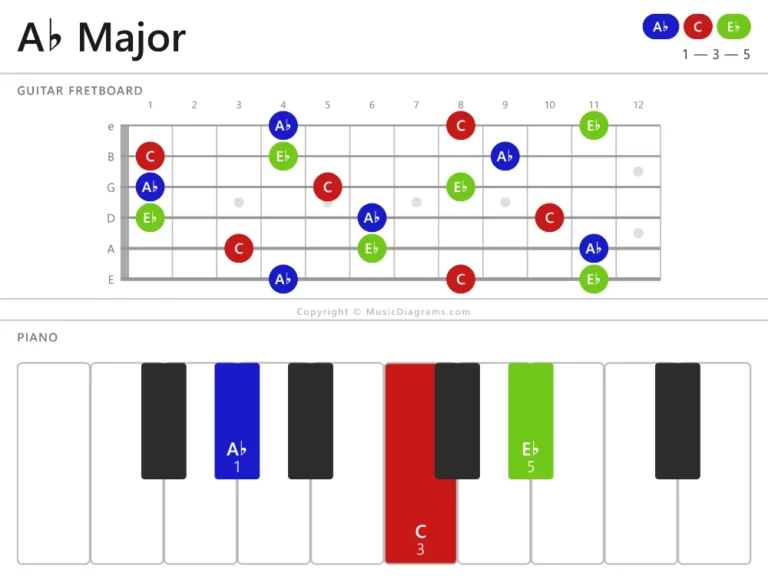
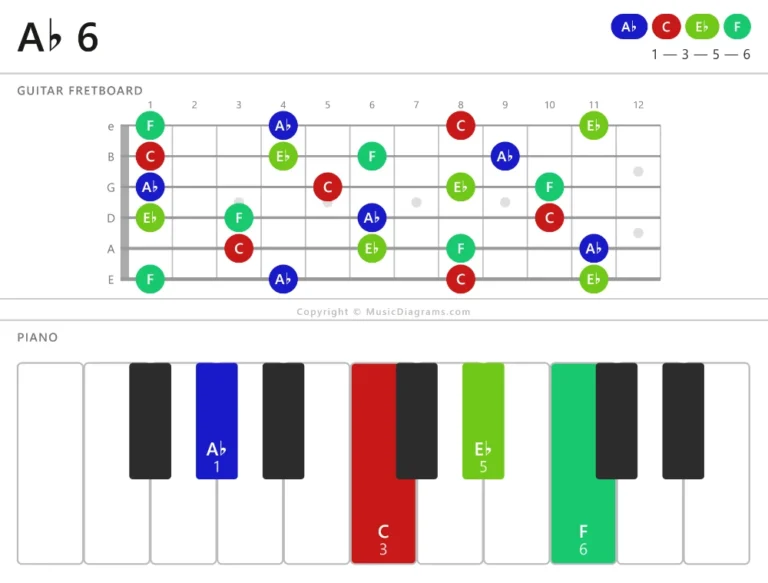
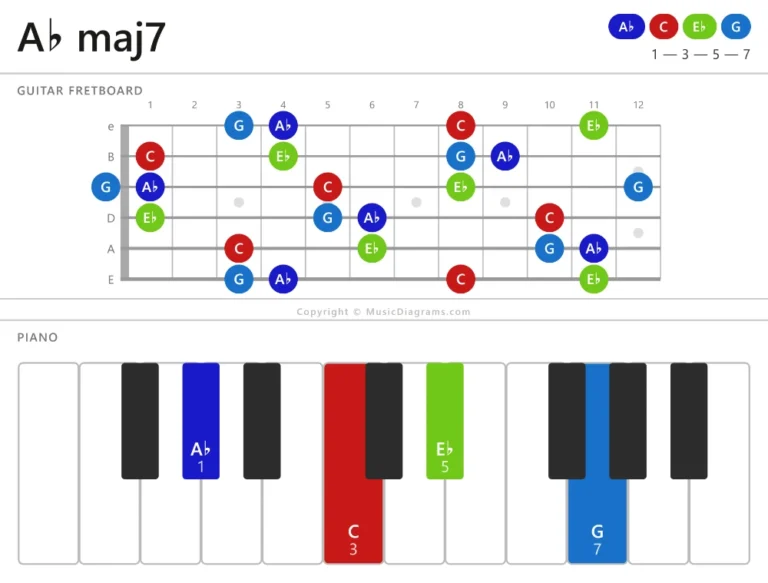
G-sharp add nine is a Major chord family chord built from the notes G♯, B♯, D♯, and A♯. Its root is G♯, and its interval number formula is 1–3–5–9, which gives you the interval names root, major third, perfect fifth, and major ninth. You may also see it written as G♯add9, G♯ add 9, or G♯ major add 9. If you look at the widget above, you can see and hear how the added ninth gives a regular major chord a brighter, more open color. For a helpful beginner explanation of intervals, see understanding chord intervals.
G♯ add9 Alternate Names
- G♯add9
- G♯ add 9
- G♯ major add 9
G♯ add9 Chord Notes
G♯ add9 Chord Formula
G♯ add9 Chord Notation
How To Use G♯ add9 In Music
Because of its major triad foundation, this chord sounds clear, warm, and uplifting, while the added ninth gives it a sparkling, slightly airy quality. That makes it useful in pop, rock, worship, indie, and film music when you want something richer than a plain major chord without sounding tense like a seventh chord. Its mood can feel more peaceful or more dramatic depending on the chords around it. For example, in a I–V–vi–IV progression in G♯ major, G♯add9 can act as I; in a IV–I move, G♯add9 may sound like a warm point of arrival; and in a vi–IV–I–V pattern, G♯add9 can feel spacious and emotional. If you want a simple comparison point, you can also read more about what is a major chord.
G♯ add9 Chord Inversions
Another useful idea for beginners is inversion, which means the chord keeps the same notes but a different note is placed in the bass. For G♯ add9, root position has G♯ as the lowest note, while inversions could place B♯, D♯, or A♯ at the bottom. These are often written as G♯add9/B♯, G♯add9/D♯, or G♯add9/A♯. Inversions do not change the chord’s basic identity, but they do change its weight and flow. A B♯ in the bass can sound a little lighter, D♯ in the bass can feel stable and smooth, and A♯ in the bass can add extra color and softness. Players use inversions to create better stepwise bass lines, smoother transitions between chords, and a different emotional shape without changing the overall harmony.